A new study from the University of Oxford reveals that the most consumption-intensive segment of the global population generates environmental damage whose cost exceeds international financial commitments for climate and biodiversity combined.
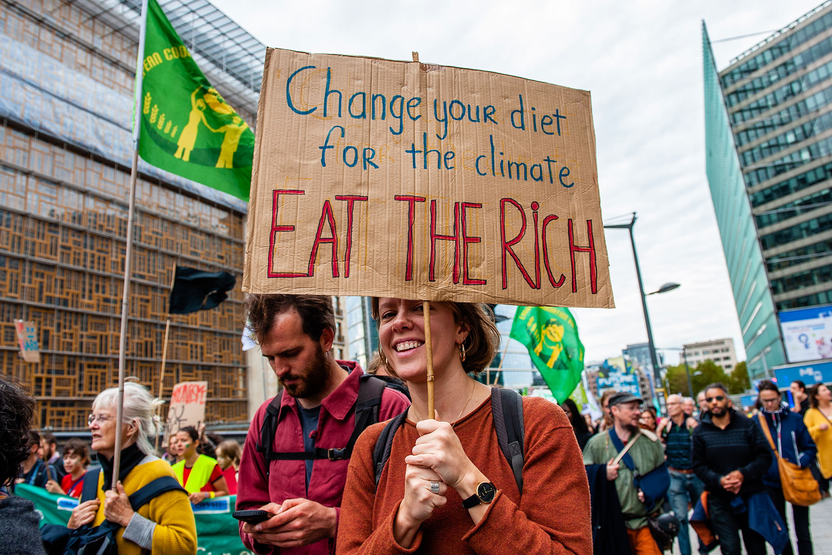
A small fraction of humanity may be responsible for a disproportionate share of the harm done to the planet. According to a study published in Communications Sustainability, the top 10% of the world's population by consumption generate between $1.7 trillion and $5.7 trillion in environmental damage annually.
These figures, which cover four of the nine planetary boundaries (climate change, biodiversity loss, nutrient pollution, and freshwater use), exceed—in their median and high estimates—the total current international commitments for climate action and biodiversity conservation. "The damage bill is higher than the money needed internationally for climate and biodiversity funds," says Inge Schrijver, lead author of the study.
Striking Disparities
For each person in this global top 10%, the average annual cost of damage ranges from $2,300 to $7,500. In the United States, where per-capita impact is highest, this amount reaches $19,000 to $63,000—equivalent to 6 to 20% of income or 0.8 to 3% of wealth. More than 60% of this group lives in the United States and the European Union.
Biodiversity loss accounts for the largest share of the overall bill (47 to 56%), ahead of climate change (36 to 45%). This finding reinforces the idea that these two crises must be addressed together, rather than as separate policy issues.
The Polluter-Pays Principle in Question
For Paul Behrens, co-author of the study and professor at the University of Oxford, the top 10% are crucial not only because they cause the most damage, but also because they hold the greatest leverage to reduce it: "The capital they invest, from pensions to infrastructure, determines which sectors grow; the companies they run define choices for everyone else; and the lifestyles they adopt shape what people consider normal."
The researchers estimate that environmental taxes targeting luxury consumption, rather than essential goods, would be both more progressive and more effective at reducing emissions. They caution, however, that pricing is only one tool and does not repair the damage itself.
These estimates are likely underestimated, as the study covers only four of the nine planetary boundaries and focuses on direct consumption, without including the impacts linked to investments.








Comment