Unprecedented aerial measurements reveal that deep, "clean" convective clouds over the oceans can reach levels of water vapor supersaturation far higher than previously thought, providing the "fuel" for a mechanism that had until now remained hypothetical.
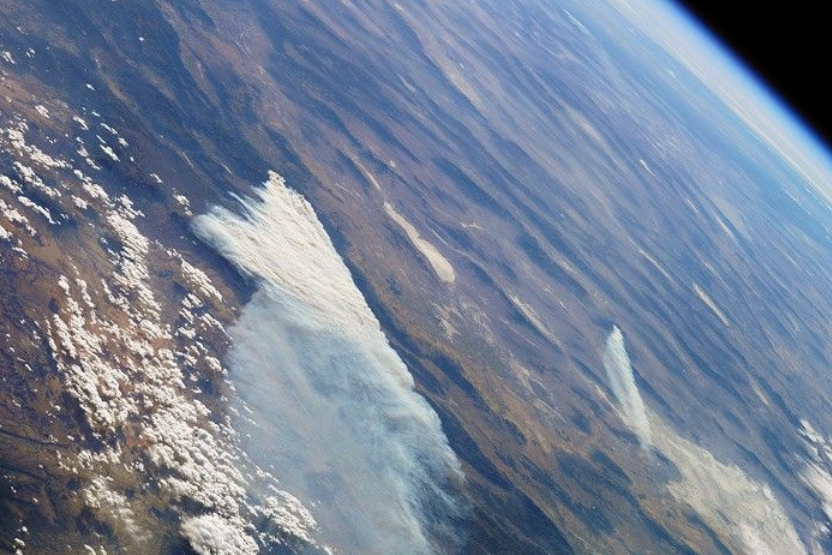
Tiny aerosol particles can alter cloud behavior, but scientists have long debated their actual ability to intensify tropical storms. One theory, known as "condensational invigoration," relies on a key condition: clouds reaching a state of high water vapor supersaturation. This state, in which the air contains more water vapor than normal, would allow aerosols to multiply droplets, enhance condensation, and release latent heat, thereby fueling updrafts.
Past aerial measurements had not detected such conditions, but a new study published in Advances in Atmospheric Sciences changes the picture. By analyzing data from NASA's CAMP2Ex campaign, conducted in 2019 over the tropical oceans near the Philippines, an international team estimated supersaturation levels based on updraft velocities and droplet sizes. The results show values exceeding 10% at around -5°C—significantly higher than previous measurements.
Confirmed Observations: A "Prerequisite" Does Exist
This work is bolstered by an independent study from the ESCAPE campaign, which observed extreme supersaturations of approximately 11% in the same types of clouds. "Previous studies focused on polluted or shallow clouds, which do not create the high supersaturation conditions required for this invigoration. It is no surprise that they did not see this mechanism in action," says Daniel Rosenfeld, a researcher at the Hebrew University of Jerusalem and co-author of the studies. "Our observations show that to see this mechanism at work, one must look at deep, clean clouds over the ocean."
The observations do not directly prove that aerosols invigorate these clouds. Rather, they establish a more fundamental point: the necessary atmospheric conditions do indeed exist in real tropical clouds. Supersaturation acts as an available "fuel": if fine aerosols are added to this environment, they could trigger the process.
The next step will be to test the mechanism more directly, by comparing clean and polluted clouds, in order to finally understand the exact role of aerosols in the intensification of storms, precipitation, and climate.









Comment