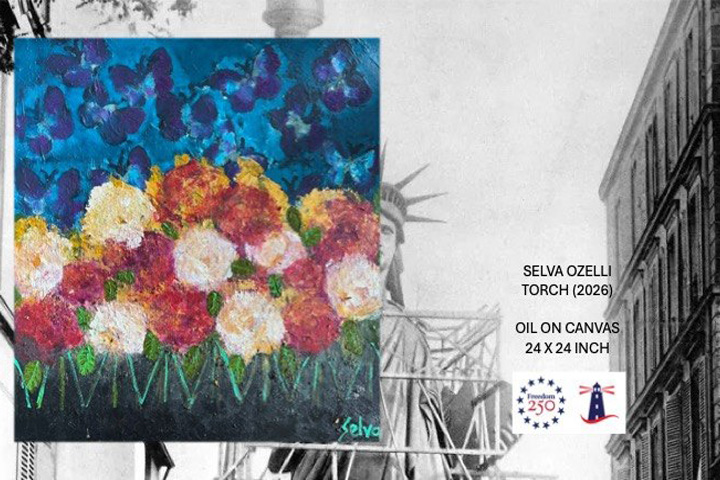
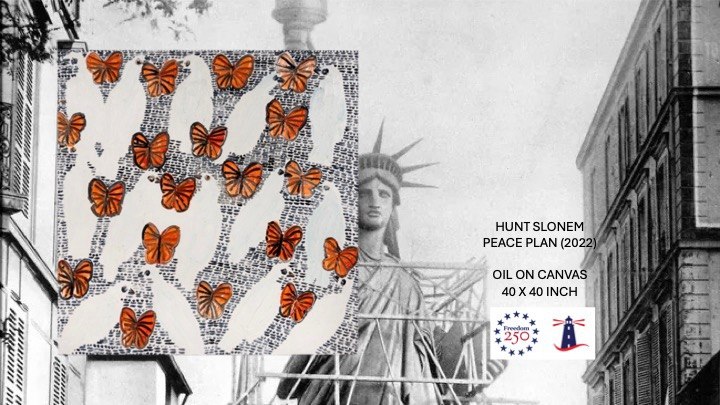
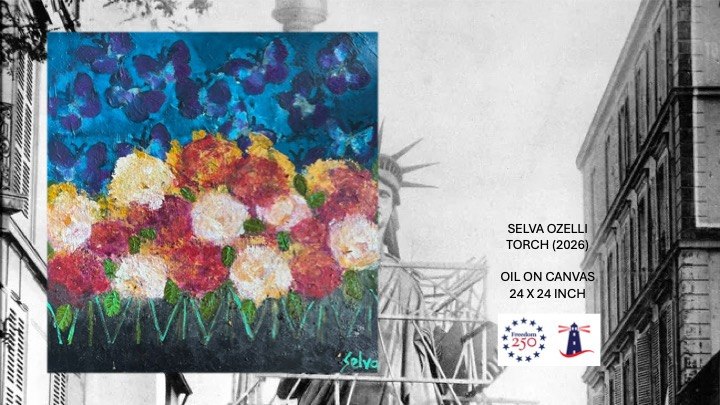
An UNGA and COP31 event you might not want to miss in New York City is the Statue of Liberty Exhibition, featuring artists Hunt Slonem’s Bird, Butterflies and Bunny Series and Selva Ozelli’s Humming Bird, Butterfly and Rose Flag CCL Series, held at the National Lighthouse Museum in Staten Island, NY, and running through the end of the year.
The period from September to December 2026 hosts major global conferences where atmosphere protection, air quality policy, space and citizen science intersect with cultural programming. Here is a curated review of international conferences integrating cultural and artistic events during this critical window:
Clean Air for Blue Skies Day – September 7, 2026
Addressing air pollution is crucial for protecting public health and mitigating the adverse effects of climate change. The International Day of Clean Air for blue skies, Led by the UN Environment Programme (UNEP) alongside the Climate and Clean Air Coalition (CCAC) focuses on finding solutions because every breath matters.
Air pollution remains the world's top environmental health risk, linked to millions of premature deaths globally each year from heart disease, stroke, and lung cancer. It also damages flora and fauna by disrupting fundamental physiological processes, altering soil and water chemistry, and degrading natural habitats.
New findings from the Global Economic Assessment, shows that coordinated policies to cut air pollution and slow climate change bring economic returns far higher than their costs.
The European Region and North America are one of the most active WHO regions in addressing air pollution and climate change with formal, legally binding regional action to tackle air pollution and connect it with broader environmental policies through the UNECE Air Convention.
How is New York Tackling Air Pollution?
In 2026, New York is tackling air pollution through a mix of active traffic tolling programs, legislative action on industrial and warehouse emissions, and an aggressively updated real-time health alert system designed to combat seasonal ozone and persistent wildfire smoke and first of its kind data center moratorium.
Congestion Pricing and Traffic Reductions
Following its historic implementation, New York City’s Congestion Relief Zone Tolling Program continues to charge drivers up to $9 to enter Manhattan below 60th Street during peak hours. An August 2026 comprehensive evaluation by the New York City Health Department confirmed that the program has successfully stabilized or slightly improved neighborhood air quality across the city, particularly easing vehicular emissions in dense urban sectors.
Wildfire Smoke and Ozone Emergency Management
Due to recurring seasonal spikes—specifically ground-level ozone from extreme summer heat and fine particulate matter (PM2.5) carried over from Canadian wildfires1—the state has transformed its responsive infrastructure by actively triggering region-specific Air Quality Health Advisories when the Air Quality Index (AQI) is forecast to exceed 100.
In July 2026, New York City experienced its second-most severe wildfire smoke event in modern history, driven by dense smoke drifting from active Canadian wildfires. The historic event blanketed the five boroughs in a thick, hazy plume from July 15 through July 19, 2026, pushing the city's air quality to its worst levels in over three years.
The crisis coincided with an intense regional heat wave, which trapped toxic ground-level pollutants and exacerbated the respiratory threat for millions of residents. Studies show that the 2023 Canadian wildfire smoke caused a 44% to 82% spike in asthma-related emergency department visits in New York City.
Emergency departments statewide standardized readiness protocols to manage surge spikes in asthma and respiratory-related admissions.
Data Centers Moratorium
The environmental and community impact of data centers in New York centers primarily on energy grid strain, localized air pollution, massive water consumption, and noise pollution. In response to a projected 12 gigawatts of new industrial power demand—largely driven by generative AI—Governor Kathy Hochul enacted a one-year statewide construction moratorium on new hyperscale data centers utilizing 50 megawatts (MW) or more.2
Flora & Fauna
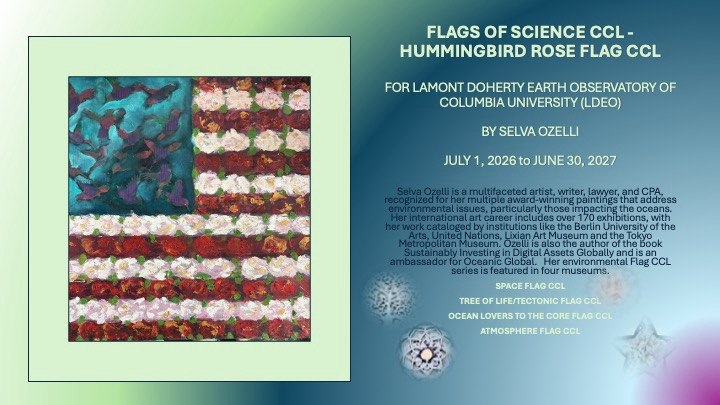
Pollution in urban environments like New York significantly disrupts delicate relationships between flowers and pollinators by degrading chemical communication and harming insect health. As air pollution breaks down the sweet-smelling chemical compounds in flowers, making it much harder for bees, butterflies, hummingbirds and other pollinators to locate them3. On this theme you may find my seven Flag CCL series exhibitions that are featuring Roses, Hummingbirds, Butterflies, Atmosphere Flags CCL that are clean air for blue skies and COP31 events as follows4:
Four Seasons at Cold Spring & Flag CCL, Terra, 116 Main Street Cold Spring, NY 10516
Rose Flag CCL, Putnam History Museum, 63 Chestnut Street, Cold Spring, NY 10516
Butterflies & Rose Flag CCL, Cozy Corner, 129-131 Main Street Cold Spring, NY 10516
Butterflies & Rose Flag CCL, Hudson Land Design, 174 Main Street, Beacon, NY 10516
Hummingbirds, Butterflies & Rose Flag CCL, National Lighthouse Museum, 200 The Promenade at Lighthouse Point, Staten Island, NY 10301
Hummingbirds, Roses and Atmosphere Flag CCL Lamont-Doherty Earth Observatory of Columbia University, 61 Route 9W, Palisades, NY 10964
Hydrangea, Hummingbirds, Butterflies & Rose Flag CCL, Havre de Grace Maritime Museum, 100 Lafayette Street, Havre de Grace, MD 21078
United Nations General Assembly (UNGA) New York, NY, USA September 8 to 28, 2026
Running parallel to the 81st session of the United Nations General Assembly (UNGA 81), Climate Week NYC September 20–27, 2026, is the largest annual climate event of its kind, bringing together over 900 events and activities across the city – in person, hybrid and online. Each year, business leaders, political change makers, local decision takers and civil society representatives of all ages and backgrounds, from all over the world, gather to drive the transition, speed up progress, and champion change that is already happening.
The core focus of CWNY is transitioning away from fossil fuels, climate justice, and mitigating super pollutants like industrial nitrous oxide (N₂O).
An UNGA and COP31 event you might not want to miss is in New York City is the Statue of Liberty Exhibition featuring artists Hunt Slonem’s Bird, Butterflies and Bunny Series and Selva Ozelli’s Humming Bird, Butterfly and Rose Flag CCL series5 held at the National Lighthouse Museum in Staten Island, NY that runs until year end.
This exhibition is specially tied to major environmental and diplomatic milestones, such as the 250th commemoration of the founding of the United States (Semiquincentennial) and the 140th anniversary of the dedication of the Statue of Liberty and promotes climate preservation, clean air consciousness.
World Space Week October 4-10, 2026
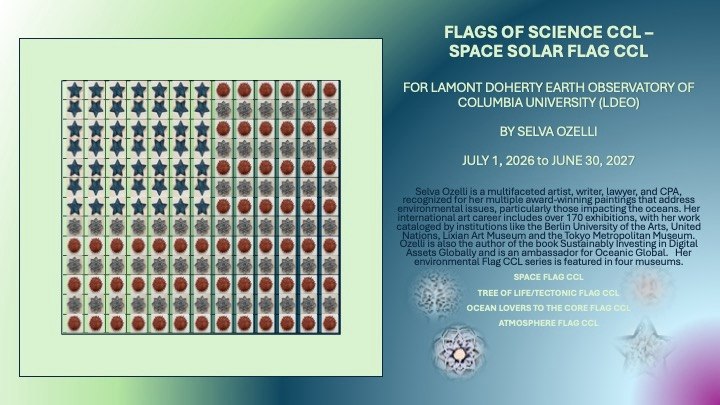
World Space Week is an annual event held from October 4 to 10 to celebrate how space science improves life on Earth, while physical space activities both help track and attempt to alleviate atmospheric pollution through the use of space solar energy.
Orbital data centers are a nascent concept gaining significant attention and regulatory filings in 2025 and 2026 to bypass terrestrial power and land constraints for artificial intelligence. Venture-backed startup Starcloud released the first widely cited white paper outlining gigawatt-scale AI compute in orbit in September 2024 and deployed an NVIDIA H100-class system into space in late 2025, running early in-orbit language model tests.
Major tech leaders—including Elon Musk via SpaceX and Jeff Bezos via Blue Origin—popularized the concept by filing massive constellation plans with the Federal Communications Commission in early 2026 to address severe Earth-based energy shortages for AI workloads.7
On this theme, I prepared the Space Solar Flag CCL oil painting as part of my Flags of Science CCL series that is a Space Week and COP31 event based on the groundbreaking research of Lamont-Doherty Earth Observatory scientists, this work celebrates the contributions of Professor Steven L. Goldstein, a Higgins Professor of Earth and Environmental Sciences at Columbia University, the interim Director and a leading researcher at the LDEO who focuses his research on the formation and evolution of the early Earth, deep Earth dynamics, and planetary origins. Through global data synthesis (using databases like GEOROC), Goldstein's work demonstrated that the deep Earth mantle has continually moved and mixed throughout geologic time. And Dr. Kerstin Lehnert who co-developed the global relational database structure that powers the GEOROC database. Originally designed alongside the PetDB system, this shared structure has made GEOROC one of the largest geochemical databases worldwide. Along with NASA Dr. Lehnert also built and operates the Astromaterials Data System (AstroMat) which is NASA's designated digital data infrastructure and archive for laboratory analytical data acquired on extraterrestrial samples—such as meteorites, cosmic dust, and mission-returned materials like those from the Apollo and OSIRIS-REx programs.
UN Climate Change Conference (UNFCCC COP 31)
The United Nations Climate Change Conference (COP31) is the 31st COP31 Türkiye Portal, headed by Murat Kurum, Minister of Environment, Urbanization and Climate Change of Turkiye which has a theme of “From Gobeklitepe to the Global Net Zero Emissions Goal” according to Dr Ege Yildirm an international heritage planner, ICOMOS Türkiye Climate Co-Coordinator, and prominent advocate within the Climate Heritage Network.
“The theme serves as a powerful historical and cultural bridge by invoking Göbeklitepe, a WORLD UNESCO HERITAGE SITE —recognized as the world's oldest known temple complex located in southeastern Türkiye— and connecting this archeological dawn of human civilization with the modern, urgent push for global decarbonization efforts” explained Dr. Ege Yıldırım, highlighting several key intersection points between archaeology and climate action:
Ancestral Knowledge & Adaptation: Ancient sites offer critical insights into how early human societies interacted with environmental shifts. This foundational history supports modern community-led adaptation frameworks, such as the global Heritage Adapts! campaign.
Cultural Re-centering: Placing a 12,000-year-old archaeological wonder at the center of a UN climate summit emphasizes that climate change is not merely a technical or economic issue, but a deeply existential and cultural crisis.
Sustainable Operations: The theme aligns with Türkiye’s broader COP31 Action Agenda, which focuses heavily on transitioning to circular systems, expanding zero-waste initiatives, and protecting historical and urban landscapes from climate risks.
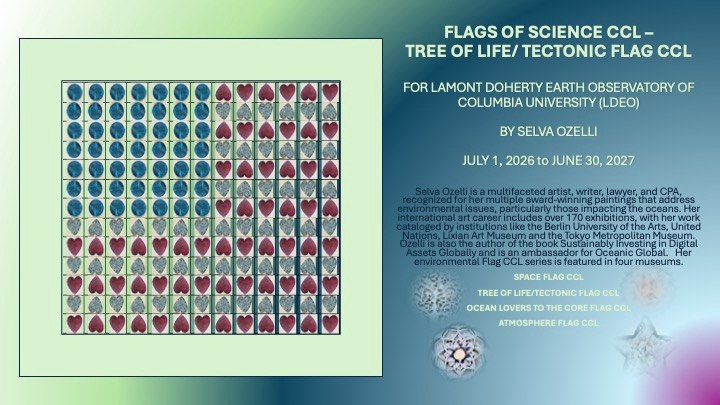
On the theme of powerful historical, geological, atmospheric and cultural bridge for COP31, I prepared two art pieces as part of my Flags of Science CCL for the COP31 shown physically at Lamont-Doherty Earth Observatory of Columbia University which will hold an, Lamont-Doherty Earth Observatory Open House on Saturday, October 17, 2026 from 10am to 4pm.
This artwork bridges the gap between ancient mythology and modern earth science by incorporating the Tree of Life symbol and the Bull of Heaven narrative from the ancient Mesopotamian Epic of Gilgamesh (ca. 2700 BCE). The Epic of Gilgamesh -- fragments of which were found at the ancient archaeological site of Hattusa near modern-day Boğazkale, Turkiye, a WORLD UNESCO HERITAGE SITE -- accidentally mirrors the birth of modern plate tectonics theory.
In the ancient epic, the Bull of Heaven is a cosmic force of destruction whose breath and movements literally cleave the earth open, causing massive chasms and earthquakes which eventually results in Gilgamesh’s friend Enkidu’s death. [Turkiye is squeezed primarily by three major tectonic plates; Eurasian Plate, Arabian Plate: Pushing northward from the southeast and south and African Plate: Pushing from the southwest and south making the region prone to frequent and devastating earthquakes.] This devastates Gilgamesh and triggers his search for immortality. Leading Gilgamesh to travel to the "mouth of the rivers" (the deep sea) to retrieve the Old Man Becomes Young Again (Tree of Life) plant from the ocean floor.
The Lamont-Doherty Earth Observatory (LDEO) Tree-Ring Laboratory, co-founded by scientists like Gordon Jacoby and Edward Cook, pioneered applying dendroseismology—tree ring analysis to explain past earthquakes through paleoseismology, recording sudden physical trauma, tilting, or root damage that abruptly alters a tree's annual growth pattern-- to date prehistoric and unrecorded seismic events.
While the epic of Gilgamesh explained seismic rifts through the lens of gods and monsters, it correctly identified the tree of life found in the ocean depths and the shaking earth as places of profound transformation and creation what we now understand through geology, plate tectonics as well as tree rings.
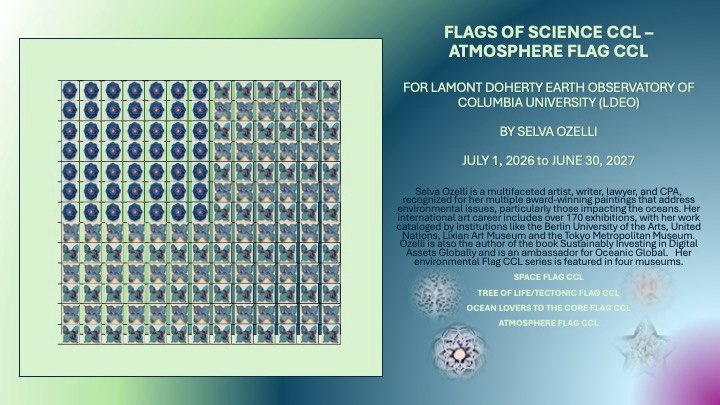
Atmosphere Flag CCL by Selva Ozelli
Created in honor of the groundbreaking research of Lamont-Doherty Earth Observatory scientists, my oil work celebrates the contributions of Robert Pincus, a research professor of ocean and climate physics and Dr. Róisín Commane who is an atmospheric chemist, leading the Commane Atmospheric Composition Group, which specializes in investigating the complex exchange of trace gases between the Earth's surface and the atmosphere.
Climate change heavily disrupts the delicate synchronicity between flowers, butterflies, and birds. As rising global temperatures cause plants to bloom weeks earlier than they traditionally have, migrating pollinators frequently arrive to find their vital nectar sources already gone, creating a destructive cycle known as "phenological mismatch.”
Turkiye is a country which serves as a critical global crossroads where vast biological diversity, vital bird migratory pathways, and foundational pollinator histories converge. Sitting at the exact intersection of Europe, Asia, and Africa, Anatolia's distinct geography shapes its natural landscapes hosting over 11,000-12,000 species of flora (plants), making it one of the most botanically diverse countries in the temperate zone with 32% being endemic and ranks top two in rose oil production.
The distinct endemic flower known for its vibrant blue and yellow coloring and its powerful ability to attract butterflies in Türkiye is the Anatolian Alkanet (Alkanna macrophylla or Alkanna orientalis variants) attracting over 400 distinct butterfly species, the highest butterfly richness in the Palearctic zone. Famous locations like Butterfly Valley (Kelebekler Vadisi) in Fethiye house over 100 species alone including the hummingbird hawk-moth (Macroglossum stellatarum), known in Turkish as the Sinekkuşu Atmaca Güvesi which is a migrating moth, not a bird. Turkiye also serves as a critical continental crossroads for approximately 480 to 500+ bird species. Two of the world's major avian migratory flyways pass directly through the country, attracting massive colorful flocks of storks, pelicans, flamingos, European Roller, Eurasian Hoopoe, Glossy Ibis, Ruddy Shelduck and birds of prey every spring and autumn.






Comment
Reply