



24 Mar 2026

Tired Earth
By The Editorial Board
The ongoing war involving the United States, Israel, and Iran is beginning to show far-reaching environmental consequences, with scientists warning that millions of migratory birds could be at risk as key flight routes across the Middle East are disrupted
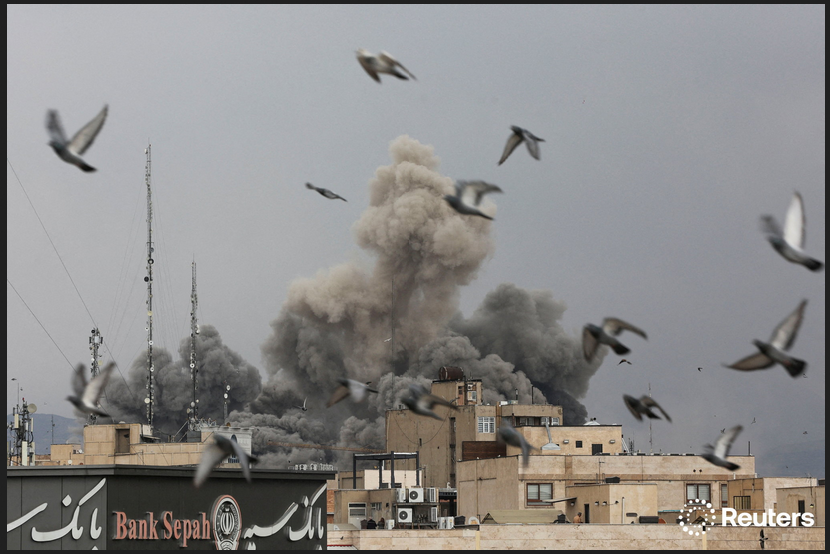
Birds fly as smoke rises following an explosion in Tehran, Iran, after Israel and the U.S. launched strikes on Iran https://reut.rs/4cVBtIo  Majid Asgaripour/WANA
According to reports and expert assessments, the intensification of airstrikes, missile launches, and military aviation activity over Iran has turned one of the world’s most critical migration corridors into a hazardous zone for wildlife. Iran lies along major Afro-Eurasian flyways used by birds traveling between Europe, Asia, and Africa—routes essential for hundreds of species each year.
Russian scientists warn that the scale of military activity—including “hundreds of aircraft, bombs, and missiles”—may force birds to abandon their traditional paths through Iran. Without access to these established routes and stopover habitats, many birds could face exhaustion, disorientation, or death during their journeys.
A critical ecological corridor under threat
The Middle East, particularly the Persian Gulf region, serves as a vital bridge for migratory birds. Experts note that millions of birds pass through the region annually, relying on predictable pathways and resting sites to survive long-distance travel.
However, recent fighting has introduced new dangers. Environmental observers report that smoke plumes, oil fires, and repeated explosions linked to the conflict are polluting the air and disrupting ecosystems, potentially altering bird movement patterns.
Nighttime bombardments are especially harmful. Bright flashes and persistent fires can disorient birds that depend on natural light cues for navigation, interfering with both migration and breeding cycles.
Early warnings suggest that the consequences may already be severe. Some reports indicate that thousands of migratory birds may have died since the escalation of hostilities, as confusion, habitat destruction, and exhaustion take their toll.
Scientific research from other conflict zones reinforces these concerns. Studies show that warfare can act as a barrier to migration, forcing birds to travel longer distances, skip vital rest stops, and expend more energy—factors that significantly increase mortality rates.
A global impact beyond the battlefield
Although the conflict is geographically concentrated, its ecological effects are global. Migratory birds connect continents; disruptions in one region can cascade across entire ecosystems. A breakdown in migration routes through Iran could affect bird populations as far away as Europe, Russia, and Africa.
At the same time, experts caution that birds do not consciously avoid war zones. Their routes are largely determined by genetics and geography, meaning many will continue to fly through dangerous areas despite the risks.
The situation highlights a broader pattern: armed conflict often inflicts hidden damage on ecosystems. From habitat destruction to pollution and direct mortality, war can undermine biodiversity in ways that persist long after the fighting ends.
As the Middle East conflict intensifies, scientists warn that migratory birds—already under pressure from climate change and habitat loss—may face yet another existential threat.
“These routes are not easily replaced,” one expert noted. “If they collapse, the consequences could be felt across the entire planet.”

The best of Tired Earth delivered to your inbox
Sign up for more inspiring photos, stories, and special offers from Tired Earth
By signing up for this email, you are agreeing to news, offers, and information from Tired Earth. Click here to visit our Privacy Policy.





Comment