



16 Mar 2026

Tired Earth
By The Editorial Board
acid rain generated by burning oil facilities can carry toxic substances into the soil and underground water systems.
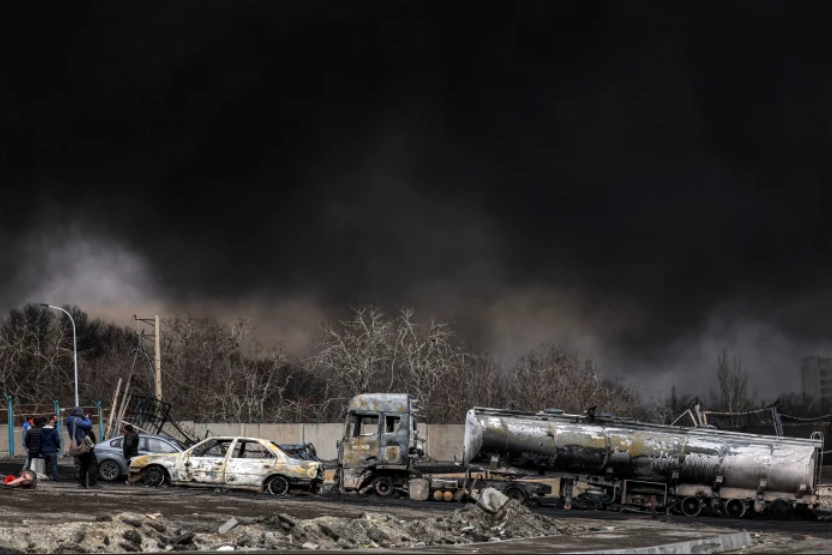
Since the outbreak of the Iran War of 2026 on February 28, 2026, the conflict has expanded beyond military confrontation and geopolitical rivalry. In the Iranian capital, the human and environmental consequences are becoming increasingly alarming. Bombings targeting oil infrastructure have plunged Tehran into what many residents describe as an apocalyptic scene: skies darkened by toxic smoke, followed by black rains carrying acidic pollutants.
During the early weeks of the war, Israel carried out a series of strikes on oil facilities in Tehran. Fuel depots and energy infrastructure ignited, producing vast columns of thick black smoke visible from miles away.
Fueled by thousands of tons of petroleum products, these fires released a dense mixture of hydrocarbons, fine particles, and toxic chemical compounds into the atmosphere. When rainfall arrived over the capital, these pollutants mixed with precipitation, producing what residents began calling “tar rain” — dark, viscous drops laden with soot and acidic residues.
Beyond the immediate shock — respiratory distress, skin irritation, and extreme air pollution — scientists warn that the long-term environmental consequences may be far more serious.
see more:
US-Israeli Ecocide in Tehran: A Dual Crime Against Human and Nature’s Rights
The Silent Threat: Groundwater Contamination
Environmental experts are particularly concerned about a danger that cannot be seen from the surface: the potential contamination of the city’s water supply.
Iranian water-resource specialist Mohammad Ebrahim Raisi explains that acid rain generated by burning oil facilities can carry toxic substances into the soil and underground water systems.
According to him, “when rain falls, acidic substances enter surface water flows and eventually infiltrate groundwater. This is one of the environmental consequences of war.”
The concern is heightened by the fact that Tehran relies heavily on underground water reserves. A significant share of the city’s drinking water is drawn from aquifers beneath the metropolitan area.
If contaminated surface water seeps into these reserves, the quality of the city’s water supply could deteriorate significantly.
“In any case, this situation will affect the quality of groundwater,” the expert warned. “If the water becomes polluted, people will undoubtedly feel the consequences.”
Pollution Spreading Through the Ecosystem
Environmental specialists note that acid rain produced by large-scale petroleum fires typically contains sulfur compounds, nitrogen oxides, and toxic hydrocarbons. Once deposited on the ground, these substances can contaminate underground aquifers, degrade agricultural soil, disrupt urban and rural ecosystems and pose long-term health risks to human populations.
In a megacity like Tehran, home to more than ten million people, prolonged water contamination could trigger serious public-health challenges — from digestive illnesses to chronic chemical exposure. Agriculture surrounding the capital could also suffer from polluted irrigation sources.
Urban wildlife, migratory birds, and plant life may likewise experience cumulative ecological damage.
War’s Toxic Legacy
Environmental devastation caused by warfare is not unprecedented. The burning of oil wells in Kuwait during the Gulf War demonstrated how military operations can transform landscapes into zones of long-lasting contamination.
Yet Tehran’s case presents a particularly dangerous combination: a densely populated metropolis, massive petroleum infrastructure, and a fragile groundwater system essential for millions of residents.
Beyond the immediate casualties of war, conflicts often leave behind an invisible legacy — poisoned soil, polluted water, and communities exposed to toxic substances for years or even generations.
A Warning for the Future
For many observers, the unfolding situation underscores a reality frequently overlooked in modern warfare: war does not only destroy cities — it destroys the ecological foundations that sustain life.
When energy infrastructure burns and toxic compounds seep into water and soil, it is not soldiers alone who pay the price. Civilians, children, and entire ecosystems bear the burden.
In Tehran today, the black rain that has fallen from the sky may stand as a haunting symbol of a war whose consequences will extend far beyond the battlefield.

The best of Tired Earth delivered to your inbox
Sign up for more inspiring photos, stories, and special offers from Tired Earth
By signing up for this email, you are agreeing to news, offers, and information from Tired Earth. Click here to visit our Privacy Policy.

Comment