



10 Feb 2026

Tired Earth
By The Editorial Board
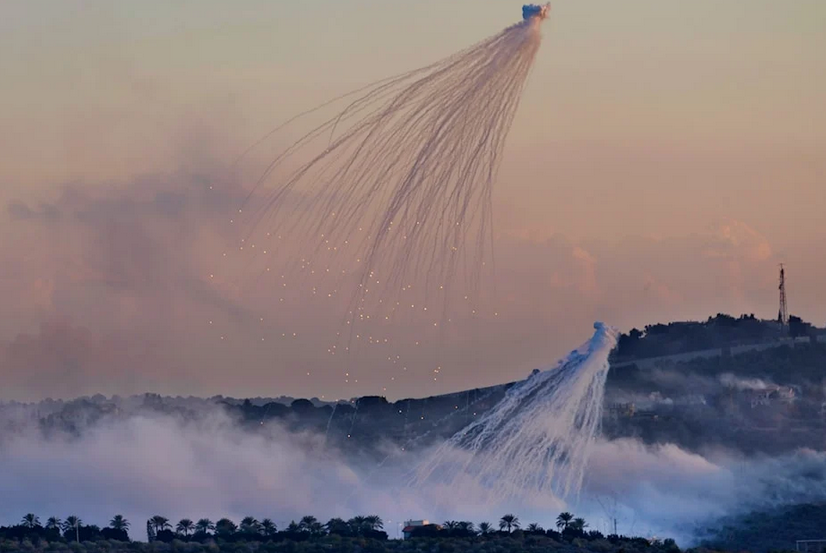
Lebanon's government has accused Israel of spraying highly toxic herbicides on southern border villages, leading to the destruction of vegetation and causing significant damage to the soil and agricultural crops.
Initial tests of the soil samples have shown that the concentrations of the pesticide exceeded the usual levels by 20 to 30 times, according to Lebanon's Ministries of Agriculture and Environment. These authorities warned that such practices pose a direct threat to the livelihoods of farmers and the food security of the region.
Evidence and Investigation
Samples from the affected areas, including soil, grass, and tree leaves, have been collected and sent to specialized laboratories in Beirut and Greece for detailed tests to determine the nature of the pesticides used and whether they violate international law.
Lebanon’s Minister of Agriculture, Nizar Hani, stated that the results would be available within 48 hours, after which legal and preventive measures would be taken both nationally and internationally. The authorities emphasized that these actions are part of a broader series of Israeli practices aimed at stripping border regions of their agricultural productivity and natural resources.
Official and Human Rights Response
Lebanese President Joseph Aoun condemned these actions, calling them a "flagrant violation of Lebanese sovereignty and an environmental and health crime against the people." He requested that the Ministry of Foreign Affairs prepare a documented legal and diplomatic file, in collaboration with the Ministries of Agriculture, Environment, and Public Health, in preparation for filing an official complaint with the United Nations Security Council.
A report prepared in cooperation with the United Nations Food and Agriculture Organization (FAO) revealed that Lebanon’s agricultural sector had incurred direct damages estimated at around 118 million USD, with overall economic losses exceeding 586 million USD. Southern Lebanon and the Bekaa Valley were identified as the hardest-hit regions.
Broader Context: Ongoing Violations
This incident comes amid Israel’s ongoing violations of the ceasefire agreement with Hezbollah and its occupation of five strategic hills in southern Lebanon since the last war. In addition to these areas, Israel has occupied other regions for decades, obstructing the return of civilians and hindering the reconstruction of the border villages.
The United Nations Interim Force in Lebanon (UNIFIL) reported that the Israeli army informed them of its intention to carry out an aerial operation to drop an "unknown" chemical substance over the border areas, asking UNIFIL forces to stay away. This led to the cancellation of more than ten field activities conducted by the peacekeeping forces.
UNIFIL's Statement and Environmental Concerns
UNIFIL condemned this activity as “unacceptable,” warning that it exposes civilians to danger and poses significant environmental risks to agricultural lands and the surrounding vegetation. The environmental implications of such chemical spraying could lead to long-term damage to Lebanon’s ecosystem and further harm its agricultural base, which is already struggling from the ongoing regional tensions.

The best of Tired Earth delivered to your inbox
Sign up for more inspiring photos, stories, and special offers from Tired Earth
By signing up for this email, you are agreeing to news, offers, and information from Tired Earth. Click here to visit our Privacy Policy.



Comment