



04 Apr 2026

Tired Earth
By The Editorial Board
A fourth strike near the Bushehr Nuclear Power Plant has sharply escalated concerns over the risk of a potential radioactive disaster in the Persian Gulf, as U.S.–Israeli attacks continue to target sensitive infrastructure since the start of the war on February 28.
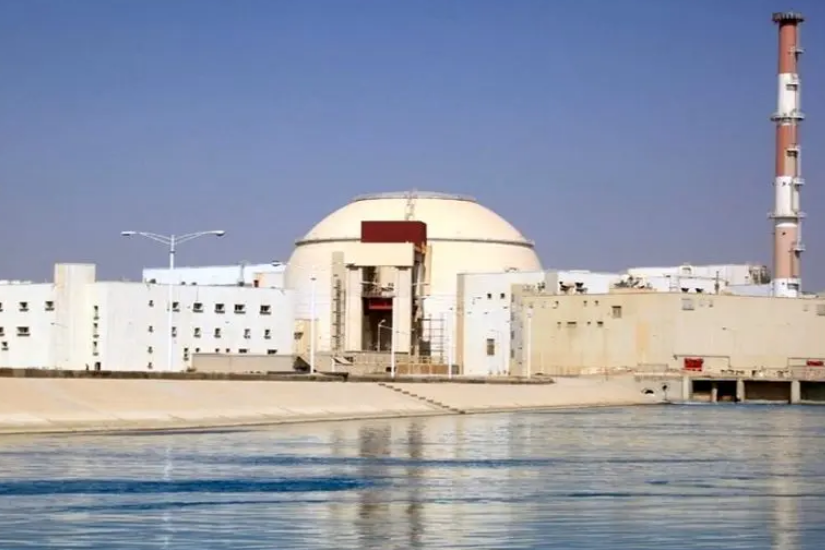
According to the International Atomic Energy Agency, a projectile hit close to the facility, killing a member of the plant’s security staff and damaging a nearby building. While no rise in radiation levels has been detected, the incident marks yet another dangerous escalation involving a civilian nuclear site.
IAEA Director General Rafael Grossi issued a warning following the strike, stressing that attacks on nuclear facilities—especially peaceful ones—must be avoided at all costs due to the grave risks they pose to human safety and the environment.
Although Iranian authorities maintain that the plant’s core systems remain intact, repeated strikes near the site are intensifying fears among environmental experts. Situated along the Persian Gulf, any damage to the facility could trigger radioactive contamination of marine ecosystems, with consequences extending far beyond Iran’s borders to Gulf states and potentially into the Indian Ocean.
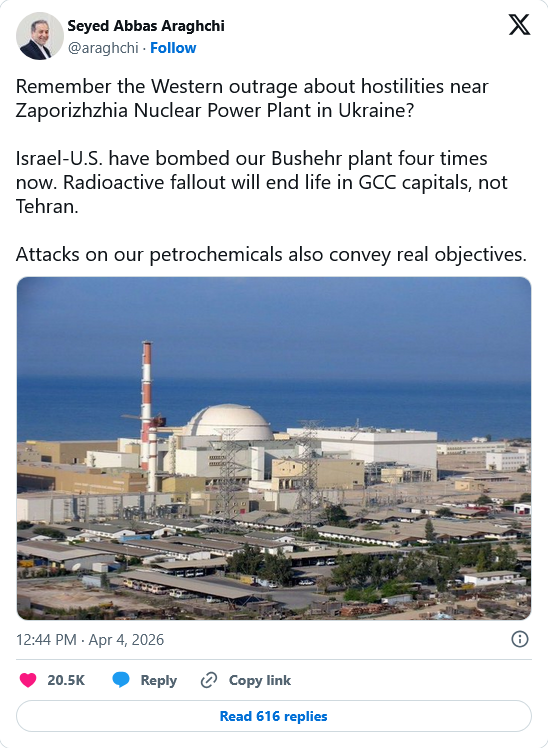
The growing pattern of attacks is also drawing political reactions.Abbas Araghchi, Minister of Foreign Affairs of Iran, pointedly recalled international concern over military activity near Ukraine’s Zaporizhzhia Nuclear Power Plant, contrasting it with what he described as muted reactions to repeated strikes on Bushehr. He warned that any radioactive fallout would not remain confined to Iran but could threaten major population centers across the Gulf.
Remember the Western outrage about hostilities near Zaporizhzhia Nuclear Power Plant in Ukraine?
— Seyed Abbas Araghchi (@araghchi) April 4, 2026
Israel-U.S. have bombed our Bushehr plant four times now. Radioactive fallout will end life in GCC capitals, not Tehran.
Attacks on our petrochemicals also convey real objectives. pic.twitter.com/onGCgkJFjt
Beyond the nuclear risk, recent strikes on petrochemical facilities further suggest a broader strategy targeting critical industrial infrastructure—raising deeper concerns about long-term environmental damage and regional instability.
In a region already under severe geopolitical strain, the continued targeting of nuclear-adjacent sites underscores a stark reality: the environmental consequences of war are no longer hypothetical—they are dangerously within reach.

The best of Tired Earth delivered to your inbox
Sign up for more inspiring photos, stories, and special offers from Tired Earth
By signing up for this email, you are agreeing to news, offers, and information from Tired Earth. Click here to visit our Privacy Policy.




Comment