



06 Apr 2026

Tired Earth
By The Editorial Board
NASA’s Artemis II mission is a landmark crewed lunar flight, but environmental experts urge caution.
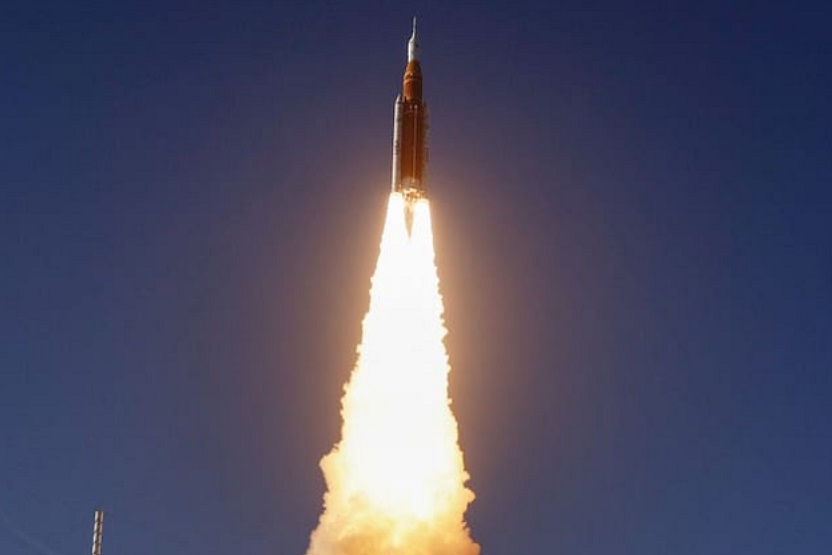
NASA’s Artemis II mission is a landmark crewed lunar flight, but environmental experts urge caution. They warn that rocket exhaust will inject ozone-destroying gases and greenhouse particles into the atmosphere, and that lunar dust and exhaust could irreversibly contaminate delicate polar ice deposits and science sites. Critics argue NASA’s bold space ambitions risk masking Earth’s urgent ecological crises.
Rocket Launches Harm Earth’s Atmosphere
Every Artemis launch uses heavy rockets whose exhaust reaches the stratosphere. As a 2025 Nature study found, “rocket emissions thin the stratospheric ozone layer” and, if launch rates keep rising, could measurably slow ozone recovery. In high-growth scenarios (thousands of launches per year by 2030), global ozone levels could drop ~0.2–0.3% on average. The culprit is solid-fuel boosters (like those on NASA’s SLS rocket), which emit chlorine gas – a known ozone destroyer. By contrast, the SLS’ hydrogen fuel produces mostly water vapor (still a greenhouse gas). Rockets also spew soot and CO₂: one analysis estimates a modern launch emits 200–300 tonnes of CO₂ and significant black carbon each time. Although these numbers are tiny compared to aviation today, spaceflight is growing fast and its upper-atmosphere emissions accumulate.
Rockets emit far more climate-warming particles per launch than jets, and solid stages release chlorine that catalyzes ozone loss. Without policy changes, satellite data imply future launch booms could delay the healing of the ozone layer. In short, even a handful of Artemis-class missions adds on to long-term atmospheric risks.
Lunar Contamination and Planetary Protection
Beyond Earth, Artemis II’s orbit and future landings raise concerns about polluting the Moon itself. The lunar environment is very fragile: without atmosphere, any exhaust or dust from landers can ricochet across the surface. A recent ESA-funded study showed that even the methane exhaust of a single lander could “hop” from the equator to the poles within days, depositing gas and destroying pristine ice. In cold polar craters that may hold ancient ices and organics, this contamination could be locked in place for eons. Planetary-protection experts warn that such pollution “could hinder scientific exploration” of the Moon.
Similarly, radio communications from Artemis orbiters or satellites could swamp the Moon’s far side – long prized for radio astronomy. Astronomers urge care: “we need to be very, very careful where we build our mines and bases,” says Prof. Richard Green of Arizona, noting only a few dozen lunar sites are scientifically “priceless” (cold, shadowed craters, radio-quiet zones). NASA’s Artemis policies do address environmental care – a 2023 agency report explicitly called for “sustainability for activities on the Moon” and assessing “environmental impacts of space activities on Earth” – but critics say they remain broad and unenforced.
Mining and Resource Exploitation Risks
The Artemis program openly envisions exploiting lunar resources: water ice to make fuel, minerals to build bases, and even exotic fuels like helium-3 for (theoretical) fusion. NASA’s Commercial Lunar Payload Services (CLPS) has already funded dozens of robotic landers to survey minerals and ice. However, many experts view this rush skeptically. A recent Guardian report warned “an unrestricted rush to exploit the moon could cause irreparable damage to precious scientific sites”, from hidden water reserves to ancient crater ice.
Lunar helium-3 (fused into energy) often headlines these debates, but it remains speculative. Journalist Vincent Lucchese (Reporterre) calls such ideas “fantasies of infinite energy” – arguing that treating the Moon as a backup planet just avoids solving Earth’s real limits. In practice, mining any moon site disturbs habitats we know little about: Apollo experiments hint micro-organisms and volatiles exist in shadowed regions. Today’s treaties forbid national claims but not private mining, so environmentalists say strict new rules are needed.
Towards Safer Space Exploration?
Experts urge a shift of priorities. They note that failing to curb terrestrial pollution by chasing “infinite space” fantasies simply postpones climate action. Practical steps could include: more research into rocket alternatives, stricter environmental reviews of launches, and a formal framework (via new laws or updated treaties) to protect lunar nature. Already, the scientific community is pushing for international “no-take” zones around the Moon’s cold traps and instrument sites. NASA itself has begun stakeholder workshops on planetary ethics, and a global working group (IAU) is seeking new lunar-protection laws. But much remains to be done before Artemis becomes truly “sustainable.”
“Rocket emissions thin the stratospheric ozone layer…ongoing launches could delay ozone recovery.”
“The spacecraft we send to explore the Moon could hinder scientific exploration.”
“We need to be very, very careful where we build our mines and bases.”

The best of Tired Earth delivered to your inbox
Sign up for more inspiring photos, stories, and special offers from Tired Earth
By signing up for this email, you are agreeing to news, offers, and information from Tired Earth. Click here to visit our Privacy Policy.



Comment