



18 Oct 2026

Utku Güven
Turkish
Today, Esmiyor is three things: an independent climate media platform, a purpose-driven creative studio, and a community.
By Selva Ozelli
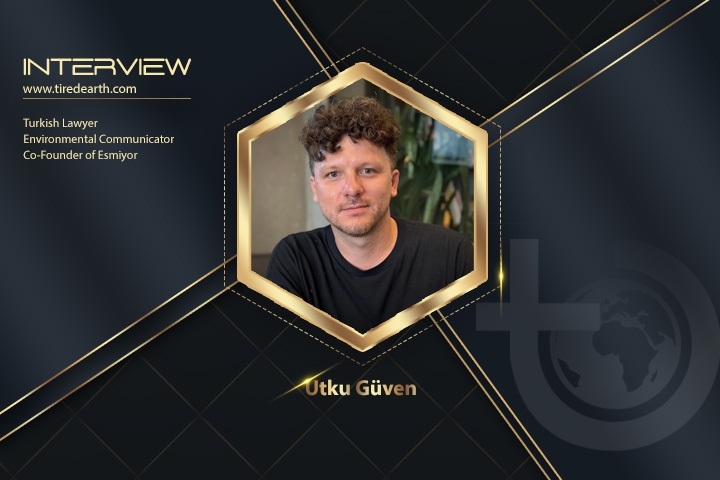
Utku Güven is a Turkish lawyer, environmental communicator, and the co-founder of Esmiyor, a purpose-driven digital platform and social enterprise focused on climate change, sustainability, and climate communication.
1. Tell us about your journey to co-founding Esmiyor during the COVID pandemic.
My background is in law and human rights, but I've always been interested in environmental issues since childhood. During the pandemic, we started Esmiyor with a simple idea: climate change shouldn't be a conversation limited to scientists and activists. We wanted to make it part of everyday life. What started as a podcast inthe end of 2020, eventually became something much bigger.
2. Tell us about the focus and projects of Esmiyor.
Today, Esmiyor is three things: an independent climate media platform, a purpose-driven creative studio, and a community. We've produced over 230 podcast episodes and work on everything from sustainability communication and corporate transformation to cultural projects, public engagement, and climate education. Essentially, we try to make complicated issues understandable and inspire meaningful action.
3. Which large companies does Esmiyor represent?
We don't really represent companies in the traditional PR sense. We collaborate with organizations that want to make sustainability part of their actual operations and communications. We've worked with Garanti BBVA, Anadolu Efes, Besler/SuperFresh, Enerjisa Üretim, and Rönesans, among others. We're quite conscious about greenwashing. Communication should follow real action, not replace it.
4. Tell us about En Küçük Müze (The Smallest Museum).
En Küçük Müze is one of our favorite ideas. We imagined a museum roughly the size of a telephone booth, combining physical and digital experiences to introduce people to Türkiye's extraordinary biodiversity. The idea is that you don't need an enormous institution to tell an important story. Sometimes ten minutes of curiosity can change how someone looks at nature.
5. Tell us about Türkiye's biodiversity in plants.
Türkiye is incredibly rich in plant diversity, with more than 12,000 recorded plant taxa and thousands found nowhere else on Earth. Its geography, climate, and position between continents make it quite extraordinary. Unfortunately, much of this richness remains unfamiliar even to people living here.
6. Tell us about Türkiye's biodiversity in pollinators.
We often think only of honeybees, but Türkiye is home to an enormous variety of wild bees, butterflies, moths, and other pollinators. They're essential to both natural ecosystems and agriculture. Protecting them means protecting habitats, reducing harmful agricultural practices, and recognizing how interconnected our food systems and nature really are.
7. Tell us about Türkiye's avian life.
Türkiye sits along major migration routes connecting Europe, Asia, and Africa. Nearly 500 bird species have been recorded here. From flamingos in wetlands to migratory raptors over Istanbul, birdlife is one of the most spectacular expressions of our biodiversity. It's also a reminder of why conservation cannot stop at national borders.
8. Tell us about Türkiye's Angora rabbit.
The Angora rabbit is a fascinating part of Ankara's natural and cultural heritage. Famous worldwide for its exceptionally soft wool, this domestic breed nearly disappeared from its homeland. There are now efforts to reintroduce it. I think it's a wonderful example of how something can become internationally famous while being almost forgotten where it originated.
9. What programs have you prepared for COP31, and which international cultural initiatives or institutions are you collaborating with?
COP31 is a major moment for us. Through Esmiyor Association, we're organizing the Conference of Youth (COY) in Antalya, bringing young climate leaders together from around the world.
We're also co-organizing the Culture x Climate Forum in Istanbul with the Entertainment + Culture Pavilion, EkoFilm, and the Culture Translators Project, with support from the British Council. Our work connects with the Culture Global Stocktake, which aims to give culture a stronger place in international climate policy. Alongside this, we're preparing independent climate coverage and public-facing programs throughout COP31.
10. Anything else you would like to add?
I think one of our biggest challenges is making climate change relevant beyond the people already engaged with it. We need more imagination, more collaboration, and perhaps a little less jargon. Climate action isn't only about technology or policy. It's also about culture, people, and how we imagine our collective future.
11. How can people reach you?
You can find us at www.esmiyor.earth or contact me directly at utku@esmiyor.earth. We're always happy to connect with people who share our curiosity and commitment to a better future.

The best of Tired Earth delivered to your inbox
Sign up for more inspiring photos, stories, and special offers from Tired Earth
By signing up for this email, you are agreeing to news, offers, and information from Tired Earth. Click here to visit our Privacy Policy.
Comment
Reply