


14 Apr 2026

Úrsula Vidal
Secretary of Culture for the state of Pará
In Amazon, Culture and indigenous rights always walked together because the maintenance of the territory and of the traditional knowledge depends on the respect for their way of life that’s based on cultural habits. For them, everything is about culture and knowledge.
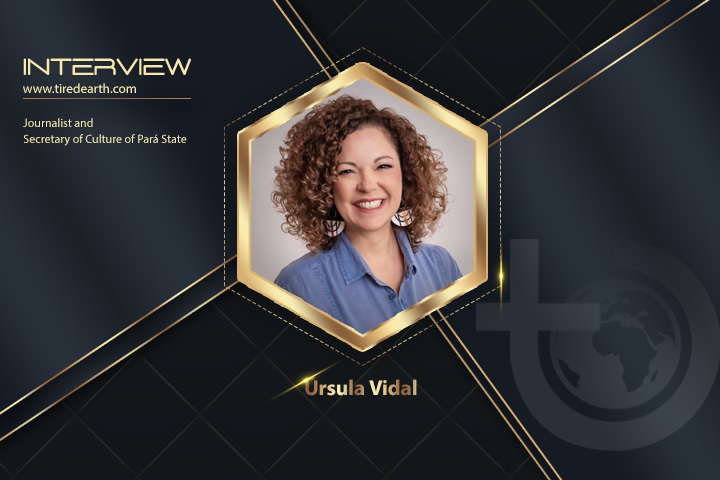
Ursula Vidal Santiago de Mendonça is a Brazilian journalist, filmmaker, and politician (MDB) known for serving as the Secretary of Culture for the state of Pará. She has a strong focus on cultural development and political activism within Brazil, previously presiding over the national forum of cultural secretaries from 2019 to 2021. She is known for promoting the cultural diversity of Pará and has been involved in promoting cultural events, including those related to the COP30 climate conference in Belém which are still ongoing during Earth Month 2026. She is a central figure in the state's environmental and cultural programming where she integrates cultural heritage with ecological activism in the Amazon and was honored with Prêmio SER MULHER [being a woman] award in early 2026, which celebrates female leadership and societal impact in Pará.
1. Tell us about your educational and professional background that led you to becoming the Secretary of Culture for the state of Pará.
I have worked as a journalist for 30 years. During this time, I developed a special interest in cultural e environmental issues. I became a documentary filmmaker, focusing in cultural manifestations and environmental urban problems. Ten years ago, I disputed an election approaching this main point as challenge and economical solution. My performance and proposals were well evaluated and I received the invitation to be part of the staff of the government as Secretary of State of Culture.
2. Tell us about your programs promoting the importance of valuing and showcasing Pará's culture and its manifestations at events, such as the COP30 climate conference held in Belém and beyond.
During the COP30, we organized a huge cultural agenda, offering to the visitors a lot of opportunities to be in contact with our popular culture, gastronomy and rich historical heritage. In a wide range of venues, as theatres, museums, restaurants and leisure centers, a diverse schedule was provided to the present our musical rhythms, the originality of our flavors, and the ancestral influences that are present in all our cultural traditions and identity. Our cultural agenda emphasized the role of culture, heritage, and local knowledge (including indigenous leadership) in shaping sustainable outcomes for the "COP of adaptation" in Belém, highlighting the importance of preserving traditional knowledge as part of the climate adaptation strategy, aiming to ensure that the voices of the Amazon's traditional inhabitants are central to the conversation.
While the main COP30 summit occurred in late 2025, many exhibitions and cultural projects we developed under the Secult Pará (Secretary of State for Culture) remain active through Earth Month 2026, including:
"Life in Inventions: Hercule Florence and Photography": An exhibition at the Photography Centre at SESC Pará, open until April 25, 2026.
Pará Culture in Public Spaces: Efforts include incorporating cultural performances and arts into major event programming, such as carimbó performances during river tours, to immerse visitors in the regional experience.
Major Concerts & Performances in Belém During Earth Month 2026
Vitor Ramil: Performing at Teatro Estação Gasômetro on April 10, 2026.
Zeca Baleiro: At the Gremio Literário E Recreativo Português on April 10, 2026.
Guns N' Roses: Scheduled at the Estádio Olímpico do Pará (Mangueirão) on April 20, 2026.
Djavan: Performing at the Hangar - Convention Center & Trade of the Amazon on October 24 and November 20, 2026.
Annual Cultural Festivals
Festa Junina (June 2026): Celebrated statewide with traditional quadrilha dances and typical Amazonian foods like canjica.
Círio de Nazaré (October 2026): This is Pará's largest cultural manifestation, featuring extensive programming curated by the Secretary of Culture.
3. COP30, held in Belém, Brazil, made significant progress in integrating cultural heritage and Indigenous knowledge into the global climate agenda, highlighting their importance for effective adaptation strategies. Tell us about your contributions to this agenda.
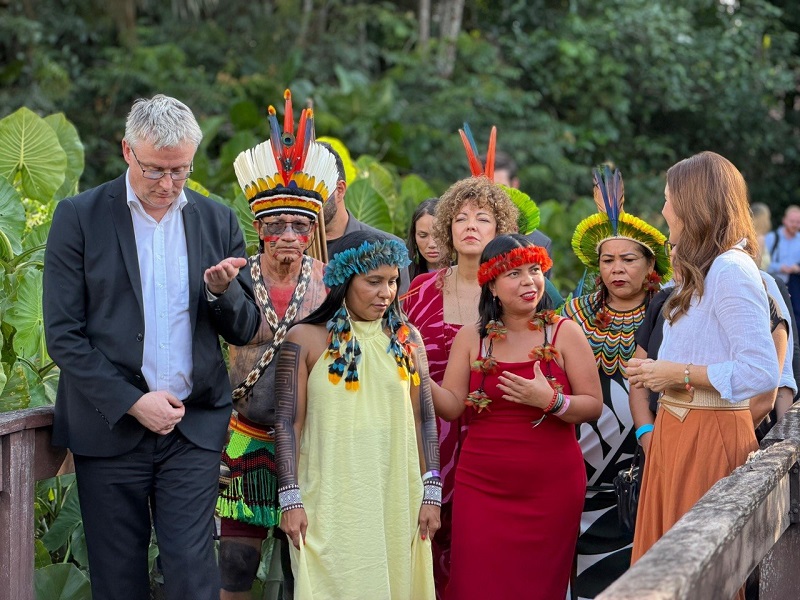
In our government, we have a Secretary of Indigenous Peoples. This team was much more devoted towards supporting and connecting indigenous communities in the agenda and debates during COP30. In Amazon, Culture and indigenous rights always walked together because the maintenance of the territory and of the traditional knowledge depends on the respect for their way of life that’s based on cultural habits. For them, everything is about culture and knowledge.
As the Secretary of Culture for the State of Pará, I continue to oversee an extensive cultural agenda for 2026 including during Earth Month that bridges traditional Amazonian heritage with global climate action. As Belém prepares for major international roles following COP30, the programming focuses on sustainability, diversity, and the "protagonism" of the Amazon.
4. As the Secretary of Culture for the state of Pará, do you collaborate with Climate Heritage Network (CHN)?
Yes, I’m part of an international group of leaders that is discussing some strategies to guarantee the protection of heritage and the development of an international mechanism based on funding to support these policies. I partnered with organizations like Julie’s Bicycle and the CHN to develop a guide titled "Culture, Sustainability and Climate Change: From Ideas to Action", advocating for the recognition of cultural heritage—both tangible and intangible—as a vital tool for climate resilience and adaptation by representing Amazonian frontline communities at international events, such as the Global Citizen Festival Amazônia.
5. Tell us about your involvement with Global Citizen.
I have been bridging my role in the Pará state government with global activism, emphasizing that sustainable development and economic progress can coexist.
I have been a key speaker for initiatives like Global Citizen, leading discussions on "Realizing an Equitable Future" and the role of the private sector in protecting the rainforest. My involvement has primarily centered on leading high-level discussions and mobilizing resources for environmental sustainability by serving as the moderator for the "Realizing an Equitable Future: The Role of the Private Sector" panel during the Global Citizen NOW: Amazônia summit in Belém, Brazil, in July 2025. As a Climate Reality Leader I used the Global Citizen platform to advocate for indigenous rights and the protection of vital ecosystems and participated in the Global Citizen Festival: Amazônia, held on November 1, 2025, in Belém, Brazil, an event that successfully mobilized over $1 billion in commitments to protect the Amazon rainforest and support its frontline communities in sustainable development in renewable energy & green tech investments which aim to provide 11 million people with job training and access to clean, renewable energy and health or financial support and to deliver solar power to remote off-grid communities and phase out fossil fuels. This funding will support the protection or restoration of 31 million hectares of rainforest.

6. Brazil is a global leader in renewable energy, consistently ranking among the top countries for sustainable power generation, with 89% of its electricity coming from renewable sources, to take the 4th spot globally as of early 2026. This Earth Day with a theme of "Our Power Our Planet" what is your message to the world?
The global theme for Earth Day 2026 is "Our Power, Our Planet". In Brazil and Latin America, the focus is on translating climate commitments into society-driven action, with a significant emphasis on Indigenous and traditional communities. Brazil is slated to host the primary Earth Day 2026 mobilization for the region, reinforcing the Global South's role in climate solutions.
Pará, Brazil, is currently a focal point for global renewable energy and climate policy, particularly as its capital, Belém, hosted COP30 in November 2025. The state is transitioning from a traditional reliance on large-scale hydropower toward a more diversified and decentralized green energy matrix aimed at both industrial decarbonization and rural energy access.
At a high-level event in Belém, Brazil launched the Belém 4x initiative, which aims to quadruple the global production of sustainable fuels—including green hydrogen and biofuels—by 2035. While Pará is home to the Tucuruí Dam, one of the world's largest hydroelectric plants, recent strategy has shifted toward distributed generation. Also to minimize deforestation, innovative floating solar farms are being deployed on Amazonian rivers, using the water’s surface to cool panels and improve efficiency.
For Earth Month 2026, my message emphasizes the "bioeconomy of knowledge," urging a global shift that treats the Amazon not just as a resource, but as a cultural and ecological heart that must be protected through indigenous wisdom and sustainable development. Because "culture is the soul of sustainability," and without a vibrant local culture, environmental efforts lack a foundation.
6. How can people reach you?
Facebook: Ursula Vidal PA
Email (via Facebook): assessoriaursulavidal@gmail.com
Instagram: @ursulavidal

The best of Tired Earth delivered to your inbox
Sign up for more inspiring photos, stories, and special offers from Tired Earth
By signing up for this email, you are agreeing to news, offers, and information from Tired Earth. Click here to visit our Privacy Policy.
Comment
Reply