


19 Oct 2026
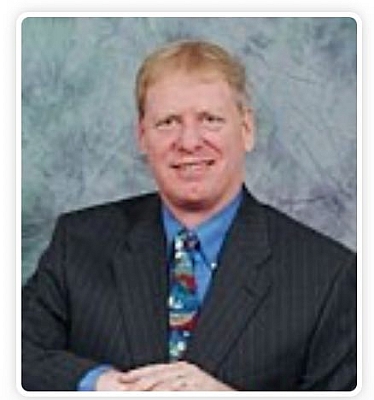
Robert A. Doyle
I would understand “River of Destiny” as a description of the Hudson’s place in the national story. That story includes achievement and opportunity, but also the consequences of growth and the choices people made about the landscape.

By Selva Ozelli
Robert A. Doyle’s book A Trip Up the Hudson and his recent presentation for the Millbrook Historical Society at the Millbrook Library explore 19th-century views of the Hudson River through the lens of the Hudson River School.
1. Tell us about your educational and professional journey that culminated in writing your book.
My background is as an auctioneer, real estate broker and appraiser. Those professions involve looking carefully, asking questions, researching what is in front of you and understanding why something matters. Those habits have served me well as a collector and researcher of Hudson River paintings.
My education of the 19thC American paintings composed by the “Nature Painters” is based on many years of close study. I have visited, and photographed the artwork and accompanying informational placards of many American museums including, in alphabetical order: Albany Institute, Ariel Art Museum, Butler Museum of Art, Carnegie Art Museum, Cincinnati Art Museum, Cleveland Museum of Art, Detroit Art Institute, Fenimore Art Museum, Hood Museum of Art, Hudson River Museum in Yonkers, Lyman Allyn Art Museum, Munson Museum of Art, Museum of Fine Art Springfield, New Britain Museum, PA Institute of Fine Art, Shelburne Museum, St. Johnsbury Athenaeum, Taft Art. Museum, Toledo Museum of Art and of course I have visited many other exhibits at the MET, Smithsonian, NY Historical Society, etc.
I have served on the board of the Dutchess County Historical Society and then served four years as its President. That involvement reinforced my interest in connecting objects and images with the people and places behind them.
This book grew out of collecting, studying and enjoying these paintings. I wanted to share them beyond the walls of our home and give readers an opportunity to take their own trip up the Hudson through the eyes of 19th-century artists.
2. Did you have any influences?
The paintings themselves have been a major influence. A familiar stretch of river can look entirely different when you see it through an artist’s eyes, painted more than 150 years ago.
Historical accounts, maps, exhibition records and artists’ diaries help me understand what I am looking at. The book includes passages from an 1866 river guide, allowing readers to encounter the views alongside descriptions from that period.
I also appreciate the knowledge and perspectives of people who study these artists. Alex Boyle and Michael Meyer contributed essays to the book, helping place the paintings in a broader context.
3. How did the Hudson River function simultaneously as a vital 19th-century steam and sail travel corridor and as America’s “River of Destiny” in the national imagination?
I think the paintings help us understand those two roles together. The Hudson was a working river, carrying passengers and goods, but it was also a place people traveled to experience its scenery.
A sailing vessel or steamboat in a landscape is more than a picturesque detail. It reminds us that the river connected communities and supported livelihoods. The mountains, changing light and broad stretches of water also offered artists a powerful subject through which to express their ideas about America.
I would understand “River of Destiny” as a description of the Hudson’s place in the national story. That story includes achievement and opportunity, but also the consequences of growth and the choices people made about the landscape.
4. How important was the Hudson River to commerce in the USA?
The Hudson’s importance extended far beyond the communities along its shores. With the opening of the Erie Canal in 1825, the river became part of a water route connecting New York Harbor with the Great Lakes and the country’s interior.
The railroad connection at Piermont is another remarkable example. Completed in 1851, the New York and Erie Railroad connected Dunkirk on Lake Erie with Piermont, where tracks extended onto a pier reaching 4,000 feet into the Hudson.
At the time, it was the longest railroad in the world. Passengers and freight could transfer between trains and steamboats serving New York City.
The railroad’s original charter restricted it to New York State. Piermont offered a practical Hudson River terminus close to the New Jersey border, allowing the company to establish its eastern connection without continuing south into New Jersey.
Together, these water and rail connections helped make New York a leading commercial center. When I look at a painted waterfront, I try to see the activity behind the scenery. A dock, railroad pier or cluster of vessels can tell us a great deal about how a community lived and how it connected with the wider world.
5. How many lighthouses were built on the Hudson River for this maritime commercial activity?
The number depends on whether we count only substantial lighthouse buildings or also the smaller lights and beacons that guided navigation. The Hudson River Maritime Museum’s lighthouse research documents dozens of lighthouses and warning lights over time.
Seven historic lighthouse structures remain along the river today, with the Statue of Liberty in New York Harbor considered separately as an eighth.
To me, these structures are reminders that the beautiful river we admire was also a demanding transportation route. Safe passage mattered to the people and businesses that depended on it.
6. Tell us about the Hudson River School artists and how artists hiked into remote Hudson Highlands and Catskill lookouts to execute en plein air oil sketches before synthesizing them into grand studio canvases for patrons.
These artists were careful observers. Many traveled to scenic locations, explored on foot and made drawings or oil studies outdoors. Those studies could become the foundation for larger paintings completed in their studios.
There was no single formula. Some works closely describe an identifiable view, while others rearrange elements to create a particular composition or mood. Smaller, quieter works can be just as revealing as a grand canvas.
One example from my collection is Jervis McEntee’s Entrance to the Highlands. His diary helps trace the painting’s development and reminds us that a finished work may reflect observation, memory and later revision.
7. Tell us about the influence of New York City and the National Academy of Design in codifying America’s first native art movement, the Hudson River School.
New York City brought artists together with patrons, exhibitions and one another. The National Academy of Design provided an important setting for exhibiting work and establishing professional reputations. Asher B. Durand’s leadership and writings also helped encourage close study of nature.
The Hudson River School was a network of artists with shared interests and professional connections. Its artists had individual approaches, and the name came into use later.
For me, the important point is that these paintings emerged from both individual experience in the landscape and an active artistic community.
8. Tell us about original works from your own personal collection to trace topography and shifting light along the water.
The book brings together 50 paintings by 43 artists in a journey from New York City to the City of Hudson. Following the river geographically gives readers a way to compare places, viewpoints and individual artistic interpretations.
Works by Jasper Francis Cropsey, Julie Hart Beers, Edmund C. Coates, Jervis McEntee, Henry Ary and others offer different ways of seeing the river. A mountain profile may help identify a location, while a dock, ferry landing or building adds another piece of the story.
Light is equally important. The same landscape can feel very different under a clear sky, in haze or across a frozen river.
Part of the pleasure is asking, “Where was the artist standing, what was there then, and what can we still recognize today?” Sometimes research answers those questions. Sometimes it leaves us with a mystery worth pursuing.
9. Is the Hudson River School movement still maintained by current artists? Who are your favorite artists?
The original Hudson River School belongs to its historical period, but the practice of observing nature closely and expressing a personal response to it remains very much alive.
Contemporary painters continue that conversation through their own eyes and experiences. They can show us the Hudson as it is today and help us notice things we might otherwise overlook.
Among the historical artists, I particularly enjoy Asher B. Durand, Jasper Francis Cropsey, Henry Ary, Edmund C. Coates and Jervis McEntee. I also enjoy discovering lesser-known artists with remarkable talent, such as Benedikt Franz Hess. There is a great deal of pleasure in finding a painting that makes you stop and look, then learning about the artist behind it.
10. Anything else you would like to add?
The book is also an opportunity to bring people together.
On October 20, the Dutchess County Historical Society is hosting our Hudson River Gathering at The Grandview in Poughkeepsie, from 3:30 p.m. until sunset. We are bringing together people involved in art, history, preservation, environmental stewardship and the communities connected by the river.
My hope is that people will meet someone they did not know, learn about one another’s work and discover opportunities to help each other. The book provides a starting point for those conversations. All proceeds from book sales at the gathering will benefit the Dutchess County Historical Society.
You do not have to be an art historian or collector to enjoy these paintings. If they encourage someone to look more closely at the Hudson, learn about a river community or take a greater interest in its future, that is a worthwhile result.
11. How can people reach you?
I welcome questions about the book, the paintings and the research behind them.
My email is hikertwo@aol.com.

The best of Tired Earth delivered to your inbox
Sign up for more inspiring photos, stories, and special offers from Tired Earth
By signing up for this email, you are agreeing to news, offers, and information from Tired Earth. Click here to visit our Privacy Policy.
Comment
Reply