


26 Oct 2026
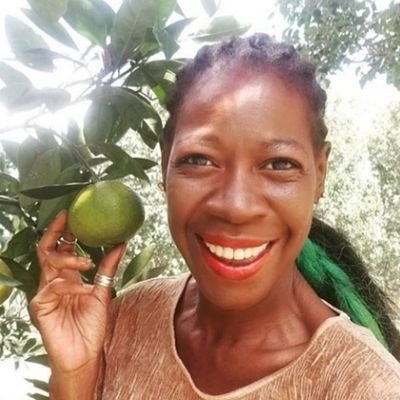
Gwen Lynn
As a native New Yorker, I'd love to sit down with Mayor Zohran Mamdani and talk about ways we can work toward a zero-litter New York City.
1. What is one thing people can do today to make a difference for the environment?
Make the decision to be green and don't litter.
Cigarettes and tobacco products are the number-one littered item in both the USA and the UK. They can cause fires, harm animals through ingestion, injure their feet or paws, and quite simply, litter looks ugly.
Humans are the only species creating and leaving behind garbage that is not compostable or readily biodegradable. In other words, much of what we throw away doesn't simply break down and disappear. Think of an old car rusting away in someone's yard.
We have a motto: Reduce, Reuse, Recycle. Reduction comes first for a reason. When it comes to litter, less is good—but the goal should be zero.
2. You're an Environmental Health and Safety Scientist, Co-Board Chairwoman with Laura Turner Seydel for Mothers & Others for Clean Air, and a public speaker for Kruger Cowne and organizations like the Smithsonian Environmental Research Center. How do you balance the hard science with making sustainability feel accessible and hopeful to everyday people?
I balance it by realizing that I am an everyday person, too, who just happens to be an Environmental Health and Safety Scientist.
In other words, how do you stay safe in your environment? Doctors, lawyers, car mechanics, nurses, teachers—we all want the same things: a good, healthy life and the ability to provide for our families and loved ones.
We all want to eat clean food and breathe clean air, whether we're at the office—occupationally; at the beach—recreationally; or at home—residentially. We all want to enhance the factors that optimize our chances of accomplishing our daily goals and, ultimately, our survival.
Scientists can do the heavy lifting, but everyday people do the wiring and make the connections so everything works.
3. Your philosophy is “1,440 minutes in a day—take one to be green.” Has that philosophy evolved over time?
No, my philosophy has not evolved. However, I do the scientific assessment first.
With over 25 years as a scientist, I ask myself: What good does it do if you can't explain a concept or thought to a fifth grader?
Without going into the molecular physiology of botanical species, I would explain to a child, for instance, that plants and trees are good for the Earth.
Why? Because they help clean the air, they provide homes for insects and animals, and they look nice. Easy peasy!
If you take care of a plant, it will try to take care of you. The same is true of our planet: if you take care of the Earth, it will take care of you.
A tree is a big plant—and you like orange juice, right? If you take care of the life of an orange tree, it will take care of you with oranges.
I'm also from New York City, and there's the old expression “in a New York minute,” meaning extremely fast. That's what I wanted my environmental communication to be—fast, easy, and concise. But instead of a New York minute, I wanted to communicate my thoughts In a Green Minute.
Pat Mitchell, former president of CNN Productions and PBS, once asked me how I came up with the name In a Green Minute for my business. I explained my philosophy: you should be able to explain a scientific concept in under a minute—simply, clearly, and in a way that someone can then communicate to others.
She laughed and said, “That's funny.”
I asked, “Why?”
She told me about Ted Turner, founder of CNN and Turner Broadcasting, whom she worked with for years. She said Ted had a 30-second rule for people meeting with him: you had to get your point across within those 30 seconds. She said he eventually increased it to 90 seconds because he got so much flak for it—30 seconds simply wasn't enough.
We both laughed.
But I still think 60 seconds will do.
4. Is there an environmental issue you'd be focused on right now that you wish more people were paying attention to—especially something regular people can do?
May I segue back to the first question?
Please don't litter.
People think someone else will clean it up. Well, many times, no one does. Litter has a tendency to end up in our waterways and clog storm drains, contributing to flooding—the kind of problem we see far too often in places like New York City.
As a native New Yorker, I'd love to sit down with Mayor Zohran Mamdani and talk about ways we can work toward a zero-litter New York City.
I also want regular folks to pay attention to the Paris Agreement and to understand the importance of voting.
The world's three largest national emitters of fossil carbon dioxide—a major contributor to human-caused climate change—are China, the United States, and India.
The United States NEEDS to be in the Paris Agreement. As of August 2026, the United States is no longer a party to the Agreement; its withdrawal took effect January 27, 2026.
Through international cooperation, not only can we here in my country look at what more we can do, but we can see what other countries are doing, learn from one another, and support each other's efforts.
And that brings me to something regular people can do: vote.
Local, state, federal—it could even be a school board election. If a candidate supports your environmental values, consider that when casting your vote.
Vote every election. Vote every time. Vote, vote, vote.
And...
BE THE GREEN.
Gwen Lynn, MS EOHS
Environmental Science
Occupational Health and Safety Science

The best of Tired Earth delivered to your inbox
Sign up for more inspiring photos, stories, and special offers from Tired Earth
By signing up for this email, you are agreeing to news, offers, and information from Tired Earth. Click here to visit our Privacy Policy.
Comment
Reply