If we recall Trump's outlandish statements at the beginning of the conflict, when he vowed to reduce Iran to the "Stone Age," it is clear that despite the enormous resources deployed by Washington and Tel Aviv, Iran — despite its losses, including the death of its Supreme Leader and numerous civilian and military officials — has not yielded, even after thousands of strikes on its territory.
1. In your view, why did Donald Trump, unlike previous US presidents, choose military confrontation with Iran in coordination with Israel? Is the nuclear issue truly at the heart of the conflict, or are broader stakes involved?
The military confrontation of 2026 between the United States/Israel and Iran, followed by the Islamabad Memorandum of June 17, 2026, is part of a longstanding historical context aimed at the total control of the Levant and the Middle East's energy wealth by Anglo-Saxon powers. Beyond this observation, England and the United States have always, and for a long time, pursued a perspective of world conquest by all possible means — military, economic, cultural, and religious. The difference in attitude between Donald Trump and Joe Biden is of course due to differences in character, but also to the "hard or soft" strategy favoured at any given moment by the administration in power — always with the same goal of bringing the adversary to its knees.
Furthermore, after the fall of Iraq and Syria, Iran is the last door blocking access to the Caucasus, Russia's soft underbelly on its southern flank. We must always keep in mind that the ultimate goal for London and Washington is to carve up Eurasia, the last major geopolitical rival of the Anglo-Saxon oligarchs. The nuclear issue is vital in this matter because Iran's acquisition of the atomic bomb would allow it, like North Korea, to achieve a virtually unassailable status quo by standing in the way of the hegemony of thalassocratic powers.
2. Does the agreement between Trump and Iran represent a victory, a defeat, or something more complex? How do you assess it?
To answer this question, let us retrace the sequence of events: unsuccessful nuclear negotiations between Washington and Tehran in April 2025, followed by the launch of the "12-Day War" by Tel Aviv in June 2025, quickly halted due to the collapse of Israel's anti-aircraft defence from lack of ammunition. Then came massive joint US-Israeli attacks ("Operation Epic Fury" and "Operation Roaring Lion") starting on February 28, 2026, targeting nuclear sites (Natanz, Fordow, Isfahan), military infrastructure, air defence sites, and Iranian political and scientific leaders (including the death of Ayatollah Khamenei). Iran retaliated with volleys of several hundred missiles and drones, notably against US bases and energy infrastructure in several Gulf countries, closed the Strait of Hormuz, and involved its allies (Hezbollah, the Houthis) in the conflict.
A 60-day interim ceasefire and a Memorandum of Understanding (MoU) were signed remotely on June 17, 2026 — in Versailles by Donald Trump, and in Tehran by President Pezeshkian. If we recall Trump's outlandish statements at the beginning of the conflict, when he vowed to reduce Iran to the "Stone Age," it is clear that despite the enormous resources deployed by Washington and Tel Aviv, Iran — despite its losses, including the death of its Supreme Leader and numerous civilian and military officials — has not yielded, even after thousands of strikes on its territory. From this perspective, Iran undeniably emerges as the victor of the conflict at this stage, as several American commentators — Tucker Carlson, John Mearsheimer, and Seymour Hersh — have pointed out.
3. What effects could this agreement have on the Russia–China–Iran axis?
One cannot truly speak of a Russia–China–Iran axis. These three countries are indeed members of the Shanghai Cooperation Organisation (SCO) and BRICS, and beyond these memberships, many ties unite them in economic, monetary, military, or scientific fields. But while there are intersecting geopolitical interests between these three powers, one cannot characterise their close relations as an "axis." It is certain that these three countries — and they are not alone — are playing the long-term card of de-dollarisation to escape Western domination. It is equally certain that they are threatened by the Anglo-Saxon powers — whether in Taiwan, Ukraine, or the Persian Gulf. But while there is undeniably genuine cooperation between them today, these three civilisation-states, with their long historical memories, have experienced rivalries in the past that curb any ambitions to form a political axis per se — even if Beijing, Moscow, and Tehran, along with many other countries, favour the establishment of a multipolar world. Multipolarity alone cannot constitute an ideological foundation on which to build relations as solid as those that the Anglo-Saxon West has built with its vassals and clients.
That said, this "agreement" is legally still only a protocol, and the Israelis have clearly indicated that they are not bound by it — as they proved by continuing their bombardment of Lebanon even though the ceasefire provided for in this agreement also included an end to bombing in the Levant. Regarding the consequences of this protocol, and this was one of Donald Trump's objectives, we have witnessed a drop in oil prices — which does not serve Russia's interests, as it needs a high barrel price to finance its military operation. On the other hand, even with oil at bargain prices, the partial reopening of the Strait of Hormuz suits Iran, which thus gets some breathing room, and above all suits China, which sees the risk of a disruption in its supply of Iranian crude recede.
4. What measures could Europe adopt towards Iran in the post-conflict period, especially if the Strait of Hormuz remains a "sword of Damocles" over the global economy?
It has long been known that Europe is an economic giant and a political dwarf. What is less well known is that it was designed as such by its mentors from the very beginning. The goal of the "Founding Fathers of Europe" was not to build a superpower but to finish off the European nation-states by diluting them into a technocratic superstructure destined to be eternally subservient to Washington. And objectively, one can consider that they achieved their goal. Where the shoe pinches today for Brussels is that Trump's America no longer resembles Biden's or Obama's America, and there is a clear ideological decoupling between Ursula von der Leyen's European Commission and the Trump administration.
To return to your question, I would point out that the Strait of Hormuz was open and functioning without hindrance before the American-Israeli aggression. Now that the Persian lion has been attacked and wounded, it should come as no surprise that it remains on guard and uses its control of the strait both to protect itself and to obtain financial compensation to repair its destroyed infrastructure. To understand just how vital Hormuz is to the global economy, we must remember that Patrick Pouyanné, the CEO of TotalEnergies, recently stated that he was ready to pay to ensure the passage of his oil through the Persian Gulf — and we are entitled to think that he expressed an opinion shared by most of his counterparts.
As for Europe, its leaders no longer know which way to turn. On one hand, they belong to the Western camp, of which the US-Israel condominium is an essential component, and even reluctantly, they will have to go there to support their allies. On the other hand, obediently serving Trump, who never ceases to humiliate them, is increasingly difficult — as we saw recently with the rebuffs from Italy's Giorgia Meloni and Spain's Pedro Sánchez, who refused to make their bases or airspace available to the US for its Gulf operation.
Europe's problem is that it remains a political dwarf and even more so a geopolitical dwarf. Despite Ursula von der Leyen's efforts to transform it into a federal power, it remains hampered by its operating rules, which prevent it from acting as a true state. So clearly, in this crisis, Brussels will be absolutely incapable of imposing anything on its members, who will act, as usual, autonomously, prioritising their own interests.
5. If the final agreement does not materialise, what scenarios do you consider most likely?
The likelihood of a final agreement being reached seems extremely low to me, given how the situation has evolved in recent days. On July 7, the United Kingdom Maritime Trade Operations (UKMTO) reported that "a tanker was attacked and hit one hour ago, 8 nautical miles east of Lima (Oman), in the southern corridor of the Strait of Hormuz." According to UKMTO, the attack caused a fire on the vessel's port side.
Furthermore, the funeral of Ali Khamenei mobilised up to 15 million Iranians, making it the most extraordinary tribute ceremony ever witnessed. Here is what Tzvi Yehezkeli, a journalist for Israeli Channel 15, had to say: "The farewell ceremony for the Iranian leader is a demonstration of strength and of Iran's reinforcement; he is being escorted like an imam who sacrificed his life for the cause of Shiism. What is happening here is not simply Khamenei's funeral; the Iranians are demanding revenge. The Iranians are sending a message to Western countries: 'You tried to break us, but you failed. Now you will have to pay the price, and revenge will come.'"
So to summarise, I fear that the conflict Trump launched under Netanyahu's pressure is only just beginning, and that the US is now mired in a war from which it no longer knows how to extract itself. The risk — and it is not negligible — is that Israel will use nuclear weapons against Tehran. On this subject, I would note that the Pentagon has just delivered to Tel Aviv the first KC-46 aerial refuelling tanker out of a total of six, which will make the Israeli air force independent of its American counterpart for long-range missions. With these tanker aircraft, Israel is now capable of sending an F-35 equipped with a nuclear bomb over Tehran.
The other, more optimistic hypothesis is that the conflict will be frozen, with a partial reopening of the Strait of Hormuz. The worst is never certain, so let us hope that the path of wisdom prevails.
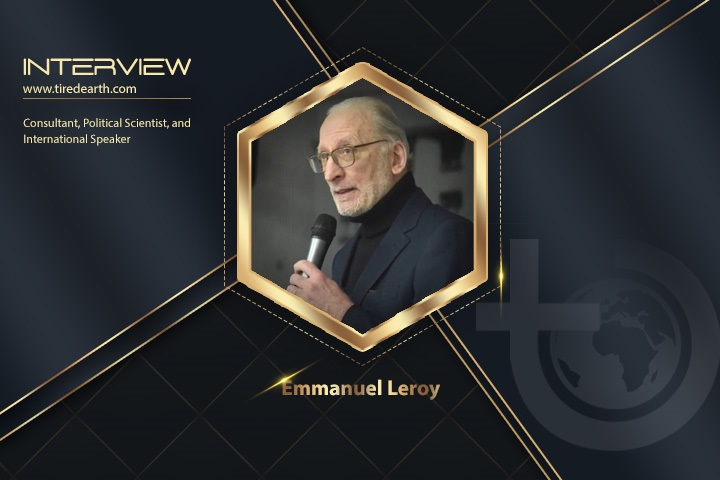
Emmanuel Leroy
July 7, 2026






Comment
Reply