


20 Nov 2026
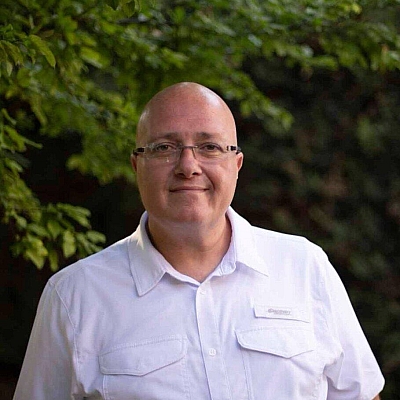
Dr. Murat Yıldız
Anturia had a clear purpose, one embedded within its very name. Drawing from a Hittite term meaning "native," "local," or "the local people," I began to focus my work on the history, culture, and nature of Anatolia.
By Selva Ozelli
COP31 President Murat Kurum (Türkiye's Minister of Environment, Urbanization and Climate Change) and Australian Climate Minister Chris Bowen have structured the summit around an "Action Agenda" and negotiation priorities aimed at closing the gap between climate pledges and real-world execution. Wildfires are a central driver behind discussions on climate adaptation, public health, forest conservation, and carbon market integrity. Hosted in a Mediterranean region acutely affected by recent blazes, the summit treats wildfires both as an urgent symptom of a "super-El Niño" warming year and as a direct threat to global emissions targets.
Key Wildfire Priorities at COP31
While wildfires are not the single headline theme of the presidency, they directly intersect with several discussions at the summit:
Backdrop of Extreme Weather. COP31 opened immediately following a year of severe climate disasters, including devastating forest fires in Canada, Indonesia, and Brazil that impacted millions of people, adding urgency to calls for faster emissions cuts and adaptation funding.
Super Pollutants and Air Quality. Reducing black carbon and air pollution from forest fires and agricultural burning is part of side-event and national planning discussions, such as Cambodia's integration of fire prevention and El Niño preparedness into its updated national climate plan.
Conservation Funding and Forest Protection. Implementing existing 2030 targets to halt and reverse forest destruction remains a core expectation of the summit. At the same time, ongoing forest fires such as the burning of over 200,000 hectares in Indonesia earlier in 2026 have complicated some nations' bids for international forest conservation funding.
Climate Vulnerability and Loss and Damage. Intensifying wildfires and prolonged droughts are central to debates over how to allocate limited adaptation finance and how the U.N. Fund for Responding to Loss and Damage can better support countries hit by escalating climate shocks.
Murat Yıldız is a forest engineer, applied ethicist, and sustainability researcher, and educator who founded Anturia, an initiative focused on environmental ethics, sustainability, and archaeology.
Anturia Consulting, the Anturia School of Environmental Ethics, and the Anturia School of Archaeology and Social Environmental Ethics is located at the Aizanoi Ancient City in Çavdarhisar, Kütahya.
He is a member of the Carbon Science Board and the Forestry Ecosystems Sink Functions Working Group at the General Directorate of Forestry (OGM) and the founding advisor for OGM Forestry Schools and the Institute of Climate and Multi-Disciplinary Research.
He serves as the President of the Ethics and Impact Rating Association (Etik ve Etki Derecelendirme Derneği) and lectures part time at TED University (Political Science and International Relations / Engineering Management programs).
1. Could you tell us about the educational and professional journey that led to the founding of Anturia?
My life, which began in Ankara due to my father’s profession, gave me the opportunity to live in many different regions and cities across Turkey. Through this, I encountered diverse climates and cultural elements, and my path crossed with many people with whom I still maintain strong bonds today. I spent about 15 years in Trabzon and pursued my education at Karadeniz Technical University. From my undergraduate years onward, I focused on the cultural dimensions of the relationship between urban dwellers and nature, the phenomenon of migration, and human behavior. At the same university, I completed my master’s degree with a thesis on the concept of "natural old-growth forests." Both my professional work and the experiences I gained during my high school years—through activities like scouting, outdoor sports, and newspaper reporting fostered a deep affinity for the field I chose.
My years at the Faculty of Forestry nurtured my ideals regarding nature conservation and forestry. I also developed a keen interest in how people express their relationship with nature through cultural mediums such as dance and music. My involvement in folk dance, my work with the music group "Kaçkar Illusion” with whom I still perform occasionally and released an album in 2004 and my volunteer efforts in environmental protection during my university years all contributed to shaping my personality as a harmonious blend of these diverse interests.
Furthermore, as a member of the International Forestry Students' Association (IFSA), I had the chance to spend time with students from dozens of different countries around the world. At that time though I was not directly involved I was able to follow closely, thanks to my friends, a project developed by forestry, medicine, and agriculture students concerning a village in Ghana. This experience was one of the factors that contributed to my development.
During my master’s studies, translating an FAO publication for a course on "Social Forestry" introduced me more deeply to a dimension of the field that is, in essence, a form of social engineering. The summary I prepared while translating the book *The Community's Toolbox: The Ideas, Methods, and Tools for Participatory Assessment, Monitoring, and Evaluation in Community Forestry* broadened my professional perspective.
Conversations during breaks with Prof. Dr. Gautam Yadama whom I met at the 9th World Forestry Congress encouraged me to focus more intensely on the relationship between society and forests.
As my master’s program was compressed into a short timeframe, it seemed I would not have enough time to conduct an investigation with the depth I had envisioned. I decided to base my thesis on the concept of "natural old-growth forests” a term that would later gain a legal basis in Turkey by efforts of my colleagues.
At this stage, which I consider a new step in my ethical journey, I began to realize that forest-dwelling villagers could be viewed as an integral part of nature.
Many years later, upon returning to Ankara the city where I was born, I took a step toward continuing my academic life independently. I became a doctoral student in the Department of Social Environmental Sciences at the Ankara University Graduate School of Social Sciences. I sought to approach the subject once more from the perspective of the city; ultimately, it was the city’s insatiable appetite that consumed the rural realm depleting both its human and natural resources at a rapid pace. I was attempting to uncover the origins of these behaviors. This was also the reason why I, as an engineer, sought to carve out a path for myself within the field of social sciences.
While searching for a term to describe the kind of conduct that might inspire human action, I enrolled in a course on Bioethics and Biopolitics and subsequently a course on Environmental Ethics taught by Prof. Dr. Nesrin Çobanoğlu Yüksel. She was my doctoral supervisor, and our bond remains as enduring as that between Aristotle and Nicomachus. I had found the magic word I was looking for: a swirling cloud of ideas moving toward a discourse that is neither relative nor fleeting, but rather permanent and enduring.
It was during this very period that Anturia was born. I registered for my doctoral program and established the company in the same week. Anturia had a clear purpose, one embedded within its very name. Drawing from a Hittite term meaning "native," "local," or "the local people," I began to focus my work on the history, culture, and nature of Anatolia.
With each passing year, we have evolved, moving toward new milestones; rather than engaging in repetitive tasks, we have built a broader, more comprehensive perspective by taking deliberate, sequential steps forward. We have embraced a philosophy of engaging with society sometimes by speaking from the podium or providing education, sometimes through specific plans and projects, and at other times by incorporating art into our endeavors.
2. Were there any role models who shaped your career choice?
In truth, while my professional identity which spans an indefinable breadth precludes me from naming a single role model, there have been several significant figures who influenced my path. These include individuals from Turkey’s millennia-long history, as well as the civilizations of the Sumerians, Hittites, and Luvians. My late mentor, Prof. Dr. Mehmet Serez, played a pivotal role by steadfastly encouraging me to become a "citizen of the world." My doctoral supervisor, Prof. Dr. Nesrin Çobanoğlu Yüksel, paved the way for me to deliver the opening lecture at an international symposium a presentation that incorporated a short documentary I had produced and original compositions performed by our ensemble, *Kaçkar Illusion*. Furthermore, my parents were instrumental; they instilled in me the reflex to view obstacles merely as circumstances to be navigated, rather than as insurmountable barriers.
On another note, my students both during my time as an assistant at the Faculty of Forestry at Karadeniz Technical University and later at TED University provided me with invaluable opportunities for growth. Through their unique perspectives and their deep engagement with the material I presented, they often prompted me to evolve my own ideas. In such moments, I am reminded of the words of Prof. Dr. Berna Alpagut, one of the founders of the Department of Social Environmental Sciences, who once remarked: "We have learned so much from you over all these years!”
3. Could you tell us about Anturia’s mission?
Anturia defines the relationship between humanity and nature through an ethical and scientific framework. Based on these definitions and research, the organization develops projects for public institutions and the private sector. It also creates and delivers educational content for students of all ages, as well as for professionals.
With a core mission rooted in applied ethics, Anturia develops ideas and practices that carry both ethical weight and meaningful impact.
Examples of our work include: management plans for the preservation of natural and cultural heritage along with an analysis of how humans interact with these site as well as educational materials on environmental ethics. We have provided training on environmental ethics and environmental communication to over 500 ministry employees. Our initiatives also encompass films, books, an educational caravan, and a mobile application. Furthermore, we engage in rural development projects, community-based art events, film festivals, art workshops, and the creation of tourism strategies. Our scientific endeavors also include a 13-part documentary series on "monument trees" produced for TRT Haber; as part of this project, we identified one of the world’s oldest yew trees and subsequently cloned it under laboratory conditions. Together with my classmate Professor Ercan Oktan, we presented all the stories featured in the documentary *Kadim*.
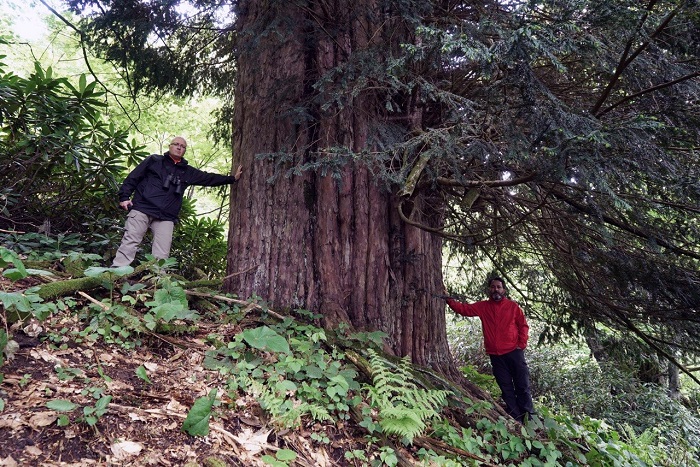
In the realm of professional development, we provide training on sustainability practices to professionals across various fields, and our Sustainable Development office offers consultancy services to companies. Additionally, in the coming weeks, we will begin delivering advanced-level training on various sustainability-related topics to forest engineers, in collaboration with the Chamber of Forest Engineers of Turkey. We also aim for these programs to offer internationally recognized certifications.
Another significant area of our work concerns the European Union Deforestation Regulation (EUDR). In particular, we are launching a module that addresses the economic visibility of forest-dwelling communities in the most remote corners of the globe, as well as the constraints that efforts to combat deforestation impose on the global economy. To this end, we are engaging in discussions with representatives from the relevant countries and all necessary institutions to build an interface that facilitates the system while protecting both nature and forest-dwelling communities. We will be launching this product in the coming weeks.
4. Anturia is active in the city of Aizanoi. What is the archaeological significance of this site, and is it included on the UNESCO World Heritage List?
Anturia is an Ankara-based consultancy firm; however, as you mentioned, its most prominent work has been carried out since 2018 at the ancient city of Aizanoi, located in Çavdarhisar, Kütahya. Aizanoi is a significant site within a region that bears traces of human presence from the Paleolithic era to the present day. While the Phrygian culture is particularly dominant here, the city was established during a period of peace under the Eastern Roman Empire. As a major metropolis—comparable to Ephesus or Pergamon Aizanoi preserves evidence of all the sedentary cultures that have inhabited the area.
In my entry on Kütahya for the *Encyclopedia of Turkish Tourism*, I described the ancient city of Aizanoi as follows:
"The ancient city of Aizanoi draws the interest of visitors with several remarkable features: it houses the world’s only theater-stadium complex built along a single axis; it contains the best-preserved Temple of Zeus in Turkey, complete with a vaulted substructure; and it boasts a *macellum* (a market for meat and fish) often referred to locally as an ‘exchange' where a list of over 1,200 different products is inscribed on the walls. Furthermore, the sacred site of Meter Steunene contains *taurobolium* and *criobolium* sacrificial pits rare finds in this country which provide crucial insights into the worship of Cybele, the Great Mother Goddess of Anatolia. Additionally, the stylized *tamgas* (emblems) carved onto the Temple of Zeus by the Çavdar Tatars a sub-group of the Anatolian Seljuks constitute some of the most significant evidence regarding the city’s connection to Turkish history." (https://turkiyeturizmansiklopedisi.com/kutahya)
Aizanoi has been on the UNESCO World Heritage Tentative List since 2012. Although we at Anturia do not hold an official mandate, we strive to contribute to the site’s journey toward inclusion on the permanent World Heritage List through our work in the city. Through the archaeology and environmental ethics courses we conduct in the schools of Çavdarhisar, we aim to keep the bond between the local community and the city’s history vibrant, while facilitating the transmission of culture incorporating elements that have survived to the present day.
5. Kütahya is a historic city located in western Turkey, where the traditional Ottoman art of ceramics and *çini* (decorative tile-making) is still kept alive today. This city is directly linked to the visual traditions explored in the novel *My Name Is Red* (*Benim Adım Kırmızı*) by Orhan Pamuk, recipient of the 2006 Nobel Prize in Literature. Could you provide some information regarding Kütahya’s cultural and historical heritage, as well as its status within UNESCO?
On October 31, 2017, Kütahya was named a "Creative City" in the field of "Crafts and Folk Art" as part of the UNESCO Creative Cities Network. With this designation, Kütahya became one of 180 cities worldwide recognized by UNESCO as a "creative city." As the first city in Turkey to join this network in the category of "Crafts and Folk Art," Kütahya preserves a wealth of cultural heritage, most notably the art of *çini*. (Source: https://www.kutahya.gov.tr/unesco-yaratici-sehirler-aginda-kadim-birsehir-kutahya)
6. Native to the steppes, mountain slopes, and plains of Central Asia, the tulip held profound spiritual, aesthetic, and royal connotations within the Ottoman Empire; it was also incorporated as a motif in the tile art of Kütahya. The iconic Ottoman tulip motif is a symbol deeply intertwined with Anatolian craftsmanship, cultural heritage, and the natural world it also serves as the symbol for COP31. Could you provide some more details on this?
Beyond their presence in cities like Kütahya and İznik, tulips a quintessential element of Ottoman culture and landscapes have become a signature figure, frequently featured in Turkey’s official promotional materials. The journey of the tulips that now adorn the gardens of the Netherlands actually began in the palaces of Istanbul.
7. During the summer and early autumn of 2026, severe heatwaves, prolonged drought, and strong seasonal winds fueled devastating wildfires across the Mediterranean basin. As a result of these fires, more than 686,000 hectares of land in the European Union and over 63,000 hectares in Turkey were reduced to ashes. Driven by temperatures exceeding 40°C and the influence of dry "meltemi" and "foehn" winds, the flames triggered mass evacuations, destroyed thousands of homes and agricultural lands, and necessitated large-scale emergency responses throughout the region. Could you explain how Turkey was severely affected by these wildfires in 2026?
Forest fires have two types of impacts: the first concerns the burning forest and the surrounding natural life, while the second affects human settlements such as cities, villages, and tourism areas. Forest fires have been a part of the ecosystem in the Turkish landscape for over 40 million years. According to available evidence, the history of pine trees in Anatolia dates back more than 40 million years, while the Turkish Pine (*Pinus brutia*) a species widespread today has existed for over 20 million years. Due to the ecological conditions of this geography, these forests which rely on fire to complete their generational cycle have become a greater focus of attention as environmental awareness has grown.
First, it must be clarified that the concept of "fire resistance" does not mean being immune to burning; rather, it refers to the ability to recover and return even stronger after a fire. In fact, all tree species are roughly equally flammable. Forest engineering is a discipline that studies the million-year-old cycles of forest ecosystems, utilizing, protecting, and enhancing them by emulating these natural processes. Following a fire, forests should initially be left to their own devices; no human can understand a forest better than the forest itself. We use data to demonstrate the inherent capacity of a forest to regenerate after a fire. However, if fires occur frequently in the same location burning the forest before it can reach maturity it gradually loses its regenerative power. In such cases, human intervention becomes necessary: forests can be restored through seeding or by planting saplings cultivated in nearby nurseries from the forest’s own most robust seeds. Nevertheless, it is important to remember that the healthiest outcome is for the forest to manage its own regeneration. Another impact concerns residential areas, which carries the risk of people losing their lives and their living spaces. There are many measures that can be taken to address this.
8. Could you discuss the impact of forest fires on air pollution, as well as the initiatives you are preparing for COP31?
Beyond the significant role forests play in maintaining air quality, fires by consuming forests that serve as carbon stocks—naturally contribute to atmospheric pollution. However, when considering their overall net benefit, forests also possess the capacity to mitigate such impacts.
Another dimension of forest fires concerns their effect on social psychology. The visibility of forest fires worldwide through news broadcasts and digital media exerts a negative psychological impact on individuals. Conditions such as "eco-anxiety" (ecological anxiety) and "ecological grief” which may arise in the aftermath of a fire can become increasingly severe when there is a lack of adequate ecological information and awareness.
At COP31, on November 17, 2026, at the invitation of the Republic of Türkiye Ministry of Health, I will deliver a presentation titled “Forest Ecosystems and Public Health: Environmental Ethics in the Climate Crisis” during the session, “Oceans, Seas, Nature, and Land Use - The Rio Synergy.” In this talk, I will also discuss the social components as well as the dimensions of climate justice and visibility of the declaration module we developed for the European Union Deforestation Regulation (EUDR).
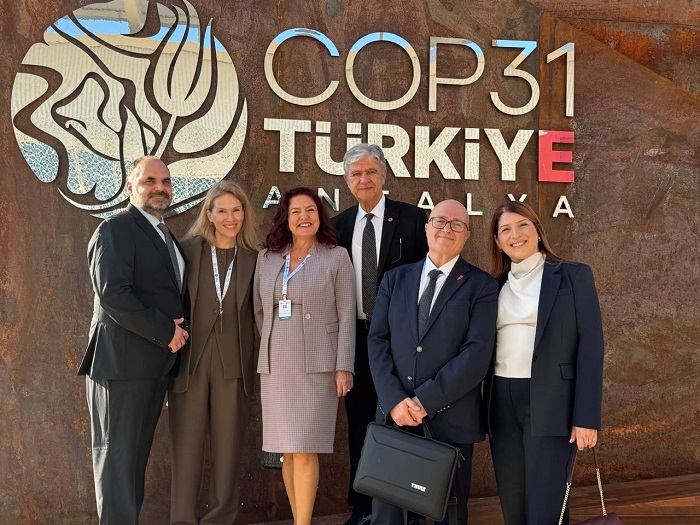
On the same day, between 16:00 and 17:00, at the Türkiye Pavilion, I will participate in a session titled “Designing Climate Citizenship Education for Sustainable Development and Green STEM for Formal Educational Environments.” Alongside esteemed academics from the United Nations University (UNU-MERIT, UNU-CRIS) and Trakya University, I will present the work we have conducted through the Anturia School of Environmental Ethics. This includes our collaboration the Anturia & Sarıca partnership and our formal protocol with the Provincial Directorate of National Education. I will also highlight our projects with students and teachers from the Çavdarhisar Vocational and Technical Agricultural High School, which focus on family-scale farming and the often-overlooked aspects of our demographics, land, and flora. Among these initiatives is Turkey’s first “Bat Hotel,” established to manage mosquitoes and other pests without the use of chemical pesticides or insecticides. On November 19, 2026, under the auspices of GÜKÇAM (Gazi University Center for Research and Application on Women and Family Studies), we will contribute by presenting the Anturia Çavdarhisar House located within the ancient city of Aizanoi in Çavdarhisar, Kütahya along with the results of our work, the new steps taken, and a statement grounded in our concrete actions.
9. Is there anything else you would like to add?
As environmental ethicists, we do not limit ourselves to the immediate framework or the visible aspects of a situation; rather, we take into account a broader sphere of impact including the various parties involved, the realm of the subconscious, deeply ingrained perceptions, and interdisciplinary connections. When attempting to repair one element, we strive to ensure that no harm comes to another. We view the ecosystem as a whole, not merely as a collection of individual species; we do not engage in speciesism.
Furthermore, we believe that one must distinguish between human duties toward nature and human responsibilities toward it. We seek to anticipate the problems that may arise when these concepts are conflated.
Many of my lectures are titled "An Ethical Critique of 'Good' Intentions." My work is grounded in the premise that well-intentioned but uninformed actions can lead to permanent destruction, the rapid spread of misconceptions, speciesism, and various forms of discrimination within the natural world a perspective I integrate into my scientific endeavors.
With my students, rather than simply trying to foster a love for nature, I focus on helping them truly understand it. I provide them with the mechanisms for critical thinking and practical application, empowering them to ask the right questions and take confident, well-considered steps enabling them to make the most sound decisions when the moment arises.
As you might appreciate, all these efforts are carried out by a team comprising many individuals. My wife, Behiye Sarıcaoğlu Yıldız who has been with us from the very first day, bringing her expertise, enthusiasm, and passion for our shared goals is the designer behind our gardens, our "bat hotel," and many other details; she has also been a key pillar in organizing the local women’s initiatives.
Expert Archaeologist Sinan Özcan who was my assistant and student during my time working on the Aizanoi excavations and is a native of Anturia is also a devoted enthusiast of environmental philosophy.
And, of course, there are the women who work with us living embodiments of Cybele, Meter Steunene, and Aba Sultan whose hard work truly moves mountains. I am referring to Nevin Çakar, Hatice İlhan, Kezban Çakar, Zennur Erdem, Hasibe Göktaş, Ummahan Çakar, Hatice Tanımaz, and all the women of Çavdarhisar. We must also acknowledge their spouses, who have always stood by them.
The Kütahya Governor’s Office, the Çavdarhisar District Governor’s Office, and all their respective departments have also been constant partners throughout this process.
10. How can people get in touch with you?
You can access my work—including my writings, documentaries, and even the musical compositions we have created with my band of 33 years (Kaçkar Illusion, inspired by humanity’s journeys through time and space)—at drmuratyildiz.tr. You can also reach me directly by emailing murat@anturia.com.tr.
https://www.linkedin.com/in/dr-murat-yildiz-anturia/
https://www.instagram.com/muratyildiz.anturia/
https://drmuratyildiz.tr/
https://anturia.com.tr/
https://cevreetigiokulu.com/
https://cavdarhisarevi.com/
LINKS
https://www.kutahya.gov.tr/unesco-yaratici-sehirler-aginda-kadim-birsehir-kutahya
https://turkiyeturizmansiklopedisi.com/kutahya
https://www.youtube.com/@KadimBelgeseli
https://www.youtube.com/@cit350socialenvionmentalet5
https://aizanoifilmfestivali.com/
Plastic Pollution in Cameroon and Africa Plastic Pollution in Cameroon and Africa

The best of Tired Earth delivered to your inbox
Sign up for more inspiring photos, stories, and special offers from Tired Earth
By signing up for this email, you are agreeing to news, offers, and information from Tired Earth. Click here to visit our Privacy Policy.
Comment
Reply