


28 Oct 2026
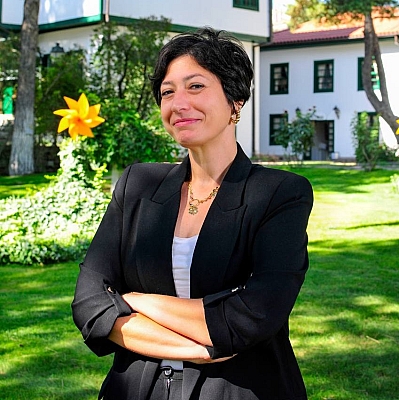
Arzu Beril Kırcı
I studied Archaeology and History of Art at Bilkent University, where I developed an appreciation for the ways material remains, works of art, architecture, and historical landscapes can help us understand past societies.
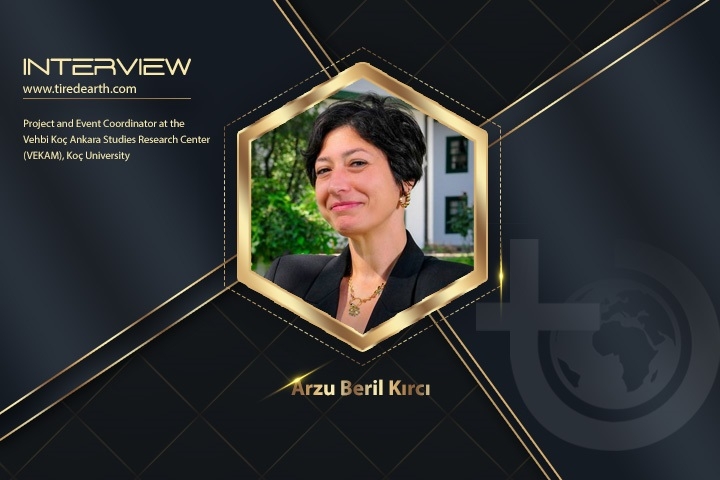
By Selva Ozelli
Arzu Beril KIRCI graduated from Bilkent University’s Department of Archaeology and History of Art in 2008. Between 2005 and 2008, she participated in the excavations at Hacımusalar Mound in Elmalı, Antalya, conducted under the auspices of Bilkent University. She received her master’s degree in Museology and Art History from Başkent University in 2015, completing her thesis, “Standing the Taste of Time: Autobiographical Memory Spaces,” under the supervision of Prof. Billur Tekkök Karaöz.
Since 2010, Kırcı has been working as a Project and Event Coordinator at Koç University’s Vehbi Koç Ankara Studies Research Center (VEKAM), where she oversees the planning and coordination of a wide range of national and international academic and cultural programmes. Her work encompasses scholarly events, including conferences, symposia, panels, seminars, and workshops, as well as exhibitions and editorial and curatorial projects. Through her work at VEKAM, she contributes to the advancement and dissemination of research on Ankara and its surroundings, fostering scholarly exchange and public engagement with the city’s cultural and historical heritage.
Her academic and professional interests include urban studies, archaeology, art history, museology, and cultural studies.
1. Tell us about your journey to becoming an archaeologist.
I believe that growing up in Anatolia, a region of extraordinary cultural and historical richness, naturally fosters an interest in the past. Its layered history and diverse cultural heritage are all around us. In a sense, I believe this curiosity is something we share as people who grow up in these lands. I was fortunate enough to have the opportunity to turn this interest into my profession.
I studied Archaeology and History of Art at Bilkent University, where I developed an appreciation for the ways material remains, works of art, architecture, and historical landscapes can help us understand past societies. Archaeology teaches us to look beyond what is immediately visible, to interpret evidence, establish connections across different periods, and understand how people have shaped—and been shaped by—their environments. This interdisciplinary perspective laid the foundations for my lasting interest in cultural and urban studies, and the ways societies preserve and transmit their collective memory.
Looking back, I see my education in Archaeology and History of Art as the starting point of a broader professional journey. It taught me to recognize the connections between people, places, and historical processes, and to appreciate the importance of safeguarding the tangible and intangible traces of our shared past.
2. Did you have any role models?
I believe that different people shape our lives at different turning points, influencing the way we think, the choices we make, and the paths we pursue. As we move through different stages of our personal and professional lives, we encounter individuals whose perspectives, achievements, and values leave a lasting impression on us. For this reason, I would find it difficult to identify a single person as my role model.
The people who have inspired me most share certain qualities: they are accomplished, guided by strong ideals, and deeply committed to their fields. Many of them are women who have pursued their ambitions with determination and dedicated themselves to making meaningful contributions to their areas of expertise. Their intellectual strength, integrity, and perseverance have been important sources of inspiration throughout my journey.
3. Tell us about the activities of VEKAM.
VEKAM, the Vehbi Koç Ankara Studies Research Center, founded by late Vehbi Koç in 1994 under the umbrella of Vehbi Koç Foundation and in 2014 affiliated with Koç University is a research center dedicated to the research, documentation and preservation of Ankara’s urban, social and cultural history, as well as that of its surrounding region. VEKAM operates as a multifaceted urban research hub and has developed into a research institution that connects academic knowledge with public engagement.
Our work encompasses research projects, archival and library services, publications, academic events and educational programmes. We preserve and make accessible valuable documentary and visual materials for researchers, support research projects, and contribute to the documentation and understanding of interdisciplinary urban and cultural studies. VEKAM functions as a vibrant academic catalyst. We provide research awards, support multidisciplinary projects, and publish bilingual academic materials, including various publications such as research books, exhibition catalogues, proceedings and the peer-reviewed Journal of Ankara Studies, to introduce local narratives to international audiences. We also work to raise public awareness of heritage and urban studies through interdisciplinary research and collaboration with universities, public institutions, local authorities, cultural organizations and international partners.
4. How did VEKAM get involved in coordinating events for COP31?
I would first clarify that VEKAM’s contribution to COP31 is rooted in its ongoing research and cultural heritage activities rather than in a dedicated programme established exclusively for the summit. As an urban research center affiliated with Koç University and based in Ankara, VEKAM has long been working on urban studies, cultural heritage, conservation, and sustainable urban development. These areas are closely connected to broader discussions on climate resilience and the future of our cities.
Within the scope of COP31, we contribute by sharing our expertise, providing input where relevant, and participating in initiatives that align with our research interests. Rather than organising a separate programme of our own, we see VEKAM as a natural partner in these efforts, bringing the perspective of cultural heritage and urban research to the wider climate discussion. We believe that our ongoing work, collaborations, and institutional experience can help strengthen the connection between cultural heritage, sustainable cities, and climate resilience.
5. Which international organizations are you collaborating with during COP31?
Different entities within the Koç Group may have their own international initiatives, collaborations, and partnerships within the framework of COP31. However, I would like to emphasize that I am speaking solely on behalf of Vehbi Koç Ankara Studies Research Center (VEKAM). Our approach is to build on VEKAM's existing academic and cultural networks and to remain open to new opportunities for international cooperation.
VEKAM has experience in international research collaborations, knowledge-sharing initiatives, digitization projects and professional networks. Our institutional work has included international projects and collaborations involving the preservation and accessibility of archival collections, as well as the exchange of knowledge on cultural and urban studies.
In the context of COP31, our priority is to contribute to the dialogue between cultural heritage research, climate resilience and sustainable urban development. We are interested in opportunities to connect with universities, research centers, cultural institutions and heritage professionals working in these fields.
I would distinguish these existing networks and our interest in future cooperation from formal COP31 partnerships. As VEKAM, we do not have any international partners specifically within the framework of COP31. However, we contribute to events organized as part of COP31 through our existing collaborations.
6. Tell us about your thoughts about the COP31 climate summit’s theme which draws inspiration from Göbeklitepe as the "Zero Point of History", symbolizing civilization's roots and the core human principles of solidarity, balance, and harmony with nature.
Göbeklitepe reminds us that human history is not only a story of technological progress, but also one of collective action, shared spaces, cultural expression and our relationship with the natural world. Its monumental structures were created by communities whose lives were closely connected to their surroundings. From my perspective, one of the most important point is that human societies have always developed through relationships with one another and with their environments. Understanding those relationships can provide us more holistic perspective regarding interpretation of the past.
In this sense, drawing inspiration from Göbeklitepe offers an opportunity to connect our shared past with a more sustainable future, reminding us that protecting cultural and natural heritage require a long-term perspective, collective action, and a commitment to preserving the values that connect us as human beings.
7. Why is Göbeklitepe important, and what can we learn from it?
Göbeklitepe is important because it challenges some of our earlier assumptions about the development of human societies. What I find particularly remarkable is the evidence of complex architectural skills, artistic expression and shared symbolic practices among these early communities. The construction of such monumental structures would have required knowledge, organization and cooperation. Göbeklitepe also reminds us human creativity, the desire to express meaning, and the need to gather and create shared spaces have deep roots. I believe this perspective is particularly relevant today, as it encourages us to reflect on the importance of solidarity and collective responsibility. It reminds us that our future depends not only on technological progress, but also on how we relate to one another and to the natural world.
8. COP31 declared “Zero Waste as Climate Action.” As Türkiye is the top destination for plastic waste exported from the European Union, receiving a record 503,000 to 510,000 tons of EU plastic waste in 2025. The country is integrating its long-standing national Zero Waste Movement—spearheaded by First Lady Emine Erdoğan —directly into the official global climate summit COP31 agenda for the first time. How does plastic waste impact archeological sites and heritage sites in Turkiye? What are your concerns about its impact on the archaeological and heritage sites in Turkiye which serves as a primary destination for global plastic waste imports—much of which is concentrated in southern processing hubs like Adana which is located at the Mediterranean coast like Antalya?
Plastic waste presents a serious challenge to both natural and cultural environments. At archaeological sites and historic places, improperly managed waste can accumulate in the landscape, detract from the site's character, affect visitor experiences and contribute to broader environmental pressures.
The environmental protection and cultural heritage conservation cannot be separated from the way we manage our cities and landscapes. Ultimately, protecting our heritage means protecting not only individual monuments, but also the landscapes, ecosystems and communities that give those places their meaning. We need scientific research, responsible planning, conservation expertise, improving cooperation between environmental authorities, heritage professionals, researchers and local communities and effective public policies.
9. Tell us about the events, cultural programmes and exhibitions you prepared for COP31.
VEKAM's contribution is rooted in its ongoing programme of research, exhibitions, publications and public engagement, rather than in a separate programme created exclusively for COP31.
As VEKAM, we have contributed to COP31-related activities by bringing our expertise in cultural heritage and urban studies into discussions on climate change and urban resilience.
One of our key contributions was a dedicated VEKAM session at the 11th Urban Studies Conference, organized by the Institute of Urban Studies in collaboration with TOBB University of Economics and Technology (TOBB ETÜ) and the Economic Policy Research Foundation of Türkiye (TEPAV), from 12 to 14 October 2026. In our session, The Contribution of Cultural Heritage to Climate Resilience, we explored how cultural heritage can contribute to building more climate-resilient cities and why heritage should be considered an integral part of sustainable urban development. The conference brought together academics, policymakers, local authorities, and other stakeholders to discuss the challenges cities face in the context of climate change. The organizing committee plans to compile the outcomes of the three-day conference and bring them to COP31, sharing its findings and recommendations with a wider international audience.
In addition, in November, VEKAM will contribute to a COP31-related meeting organized by Koç University in Antalya, with the participation of VEKAM Director Professor Filiz Yenişehirlioğlu.
Through these contributions, we aim to highlight the role of cultural heritage in climate action and demonstrate how historical knowledge, cultural memory, and heritage conservation can inform discussions on sustainable and resilient cities.
For us, COP31 is an important opportunity to make this ongoing work more visible, strengthen dialogue between different disciplines and institutions, and explore new possibilities for collaboration.
10. Is there anything else you would like to add?
As a research center at Koç University, VEKAM works to document Ankara's urban and cultural history, support research, preserve archival collections and make cultural heritage accessible to researchers and the public. We believe that cultural heritage should have a meaningful place in discussions about climate resilience and sustainable development. Historic buildings, urban landscapes, archives and collective memory are not separate from contemporary life; they are part of the resources through which societies understand their identities and plan their futures.
COP31 is an important moment for bringing these connections into wider international discussion. But our contribution is part of a longer-term commitment: continuing to research, preserve, share knowledge and work with other institutions for the benefit of future generations and our commitment to urban and cultural studies, research and conservation extends well beyond the summit itself.
11. How can people reach you?
People interested in VEKAM's research, publications, exhibitions and projects can reach us through the official communication channels of the Vehbi Koç Ankara Studies Research Center of Koç University.
We welcome opportunities for academic exchange, institutional cooperation and collaborative projects related to urban studies, cultural heritage, archival research and public engagement.
Further information about our activities and contact details is available through VEKAM's official website and social media channels.
www.vekam.ku.edu.tr

The best of Tired Earth delivered to your inbox
Sign up for more inspiring photos, stories, and special offers from Tired Earth
By signing up for this email, you are agreeing to news, offers, and information from Tired Earth. Click here to visit our Privacy Policy.
Comment
Reply