



06 May 2026

Tired Earth
By The Editorial Board
A field in southern Lebanon does not need a bomb to kill a family. It only needs to become silent.
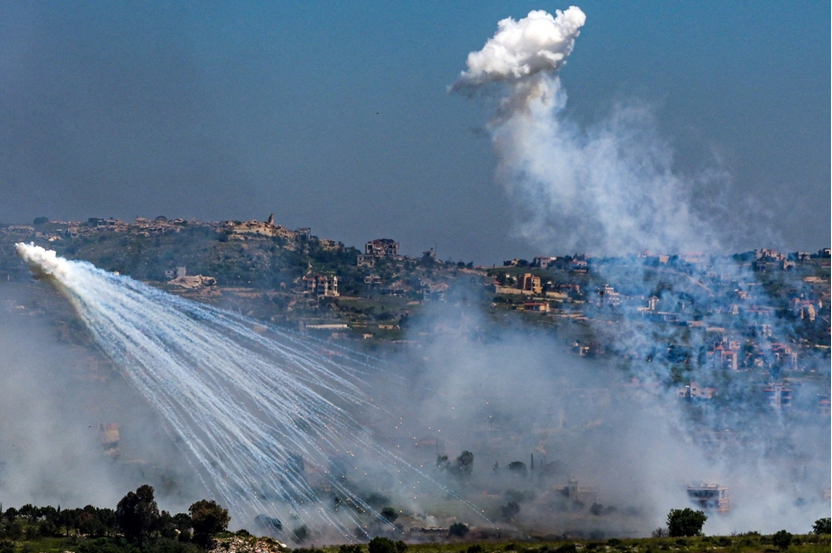
Right now, tens of thousands of hectares of Lebanese farmland have fallen silent — not because winter has passed, but because the ground itself has been poisoned. The bombs that fell were not only designed to explode. Some were designed to burn, to contaminate, and to make the earth unyielding for years to come.
This is not collateral damage. This is agricultural annihilation by design.
And the consequence is stark: More than 1.2 million people in Lebanon are now threatened by famine, not because food cannot be imported, but because the country can no longer grow its own. [1]
The Poison That Does Not Leave
White phosphorus is not a conventional explosive. When deployed over farmland, it behaves like a slow-release acid. It ignites on contact with oxygen, burning at over 800 degrees Celsius — hot enough to melt through flesh and bone. But its true damage to agriculture begins after the fire is extinguished.
When white phosphorus hits soil, it reacts with moisture to form phosphoric acid and various toxic phosphorus compounds. The immediate effect is a dramatic drop in soil pH — meaning the ground becomes highly acidic, often below levels that support plant life. Essential nutrients like calcium, magnesium, and potassium are locked away. Microbial communities that break down organic matter into food for crops die within days.
In normal farming, phosphorus is a fertilizer. But white phosphorus residue is a sterilizer.
"The soil does not recover quickly from this," a Lebanese agronomist told local media, speaking on condition of anonymity. "We are talking about years — sometimes decades — before the land can safely grow food again."
Lebanon's National Council for Scientific Research has confirmed that soil samples taken from bombed agricultural zones show levels of phosphorus contamination far beyond any natural or agricultural baseline. In some areas, the ground has turned gray and brittle. Nothing grows.
54,000 Hectares of Dead Earth
According to the latest agricultural assessments, 54,000 hectares of Lebanese farmland — more than 22 percent of the country’s cultivable land — have been directly damaged by the war. Within that area, satellite imagery and on-the-ground surveys show that white phosphorus has been used systematically along a 17-kilometer border strip, as well as in inland agricultural zones far from any immediate military front.
In these areas, the destruction is not just the loss of a single season’s harvest. It is the loss of the land itself.
"The use of white phosphorus in civilian agricultural areas is not a military accident," said Lebanese Environment Minister Tamara Al-Zein in a recent briefing. "It is a war crime against the environment. It is ecocide."
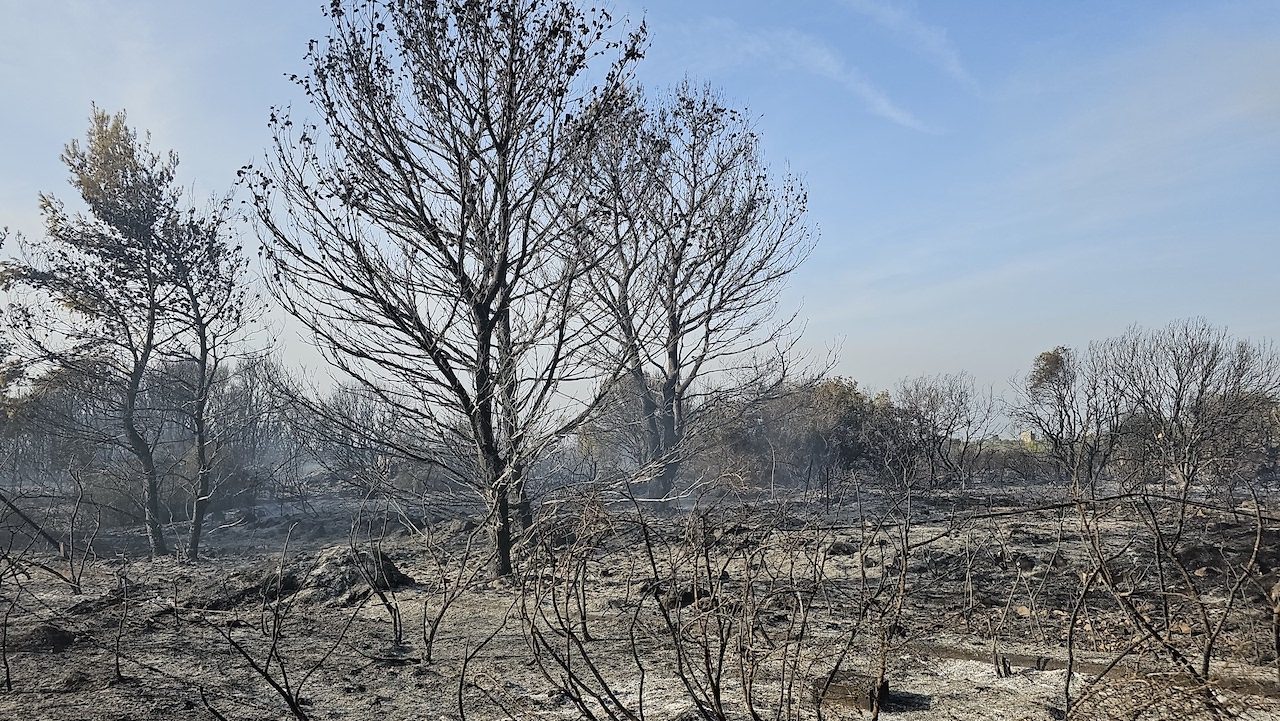
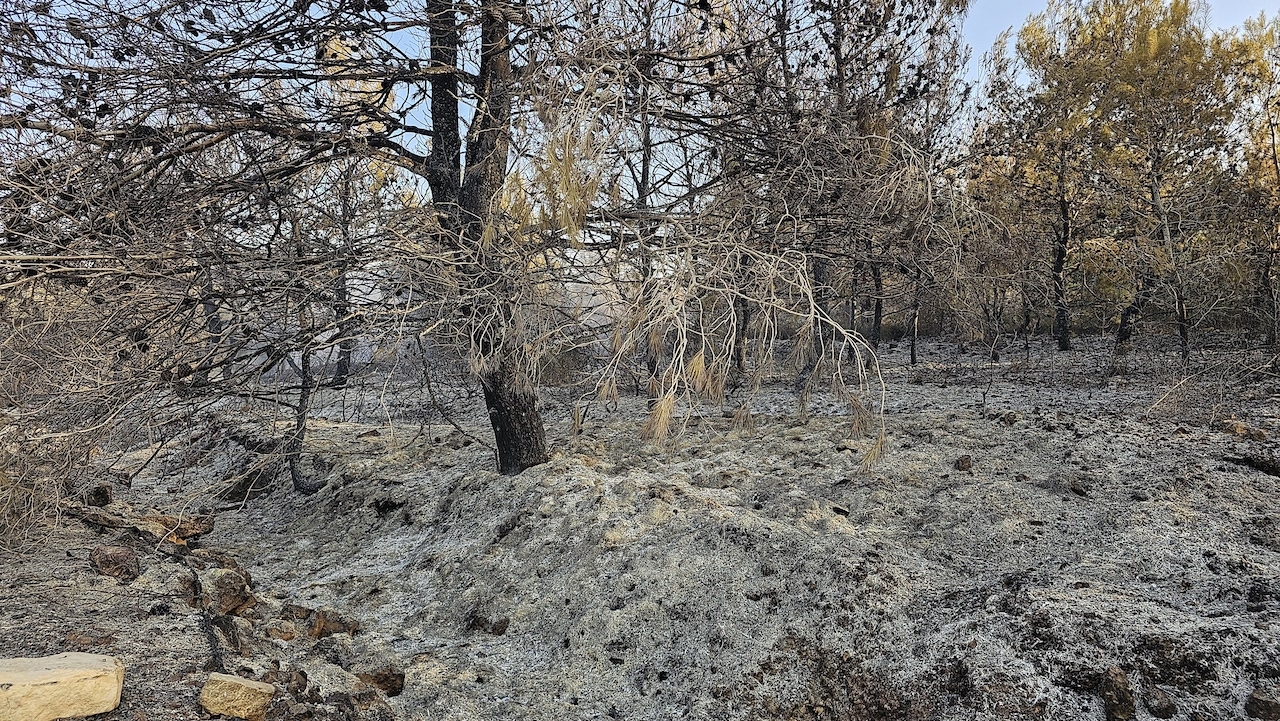
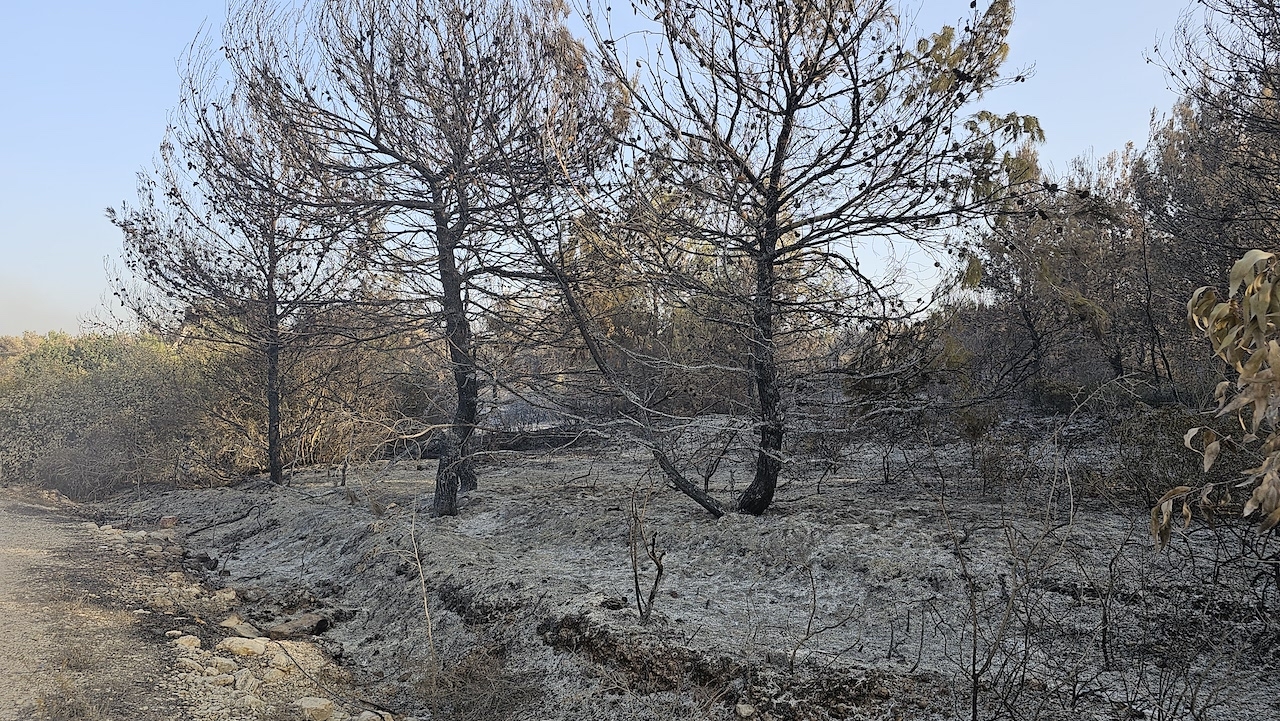
Forests burned by white phosphorus munitions in Naqoura. Naqoura, Lebanon. November 3, 2023. (Photo courtesy of The Green Southerners)
What Farmers See When They Return
In the village of Aytaroun — once the largest tobacco-producing community in southern Lebanon — farmers who fled the bombing have begun to return. But what they find is not land they can replant.
The tobacco barns are rubble. The irrigation channels are shattered. But worst of all: the soil smells strange. It crumbles unnaturally. In some places, small white residues still surface after rain.
"We tried to plant a small patch of beans as a test," one farmer told The New Arab. "The seeds sprouted, then turned yellow, then died. All of them."
The Lebanese Ministry of Agriculture has advised farmers not to work contaminated land until soil tests are completed. But there is no national decontamination program. There is no fund to remove poisoned topsoil. There is only warning signs that no one has the money to erect.
The Herbicide Layer on Top
The phosphorus is not acting alone.
Lebanese officials have also documented the aerial spraying of concentrated glyphosate — a systemic herbicide — along wide agricultural strips near the border. Glyphosate kills plants down to the root. In normal farming, it is used sparingly. In the concentration detected by Lebanese scientists, it is a land-clearing weapon.
The combination is devastating. White phosphorus destroys the soil biology and acidifies the ground. Glyphosate ensures that any surviving plant is immediately killed. Together, they create a double-lock on sterility.
Famine Is Not a Warning. It Is a Timeline.
The World Food Programme now estimates that 1.24 million people in Lebanon are facing acute food insecurity — a technical term that means people are already reducing meals, skipping days of eating, or selling household assets to buy bread. Among them are 250,000 people living below the extreme poverty line.
But the agency’s projections assume that some domestic harvest will still occur. What happens if the poisoned fields are never restored?
Lebanon already imports 80 percent of its food. Before the war, the south produced a quarter of the country’s agricultural output — including bananas, citrus, olives, and tobacco. Today, 78 percent of southern farmers have stopped working. Not because they are lazy. Because they have nothing left to work with.
The alternative is more imports. But imports cost foreign currency — and Lebanon’s treasury is empty. After the war, the Institute of International Finance projected Lebanon’s economy would contract by 12 to 16 percent. The Lebanese pound has already lost more than 95 percent of its value since 2019. Every loaf of imported bread is a political crisis waiting to happen.
A Ceasefire Cannot Fix Poisoned Ground
A fragile ceasefire was announced in April and extended into May. Bombs have fallen less frequently. Some displaced families have returned. But a ceasefire does not neutralize white phosphorus residue. A truce does not remove glyphosate from the water table.
The Lebanese government has appealed for international help to conduct large-scale soil remediation. The UN Environment Programme has taken initial samples. But no funding has been allocated for the kind of massive topsoil removal and replacement that would be required to make southern farmland productive again.
In the meantime, farmers watch their land from a distance. Some have tried to fence off the worst-contaminated areas. Others simply weep when they walk past.
The Long Silence
Olive trees in Lebanon have survived Roman conquest, Ottoman rule, French mandate, civil war, and Israeli invasions. Some are over a thousand years old. They have deep roots — literally and historically. But they cannot survive soil that has been chemically turned against them.
One farmer in Yaroun, whose family had cultivated olives for eight generations, told a visiting reporter: "I am not afraid of the bombs anymore. I am afraid of the ground after the bombs."
That fear is now spreading northward, as displaced farmers share stories of dead soil and failed test patches. And with each passing month, the window for rehabilitation closes further. Microbes do not regenerate quickly. Soil pH does not rebalance on its own. And a hungry country cannot wait for nature to heal.
Lebanon is not facing a food shortage. It is facing a slow-motion agricultural extinction in its most fertile region. And the weapon doing the work is not the explosion — it is the poison left behind.

The best of Tired Earth delivered to your inbox
Sign up for more inspiring photos, stories, and special offers from Tired Earth
By signing up for this email, you are agreeing to news, offers, and information from Tired Earth. Click here to visit our Privacy Policy.



Comment
Reply