



19 May 2026

Tired Earth
By The Editorial Board
On the surface, there is no connection between the missiles striking the Middle East and the gentle giants gliding through the icy waters off South Africa's coast. One is a story of geopolitics, oil tankers, and closed straits. The other is a story of migration, breeding grounds, and endangered species. But the ocean does not care for human borders. And the tankers now rounding the Cape of Good Hope have brought the war home to the whales...
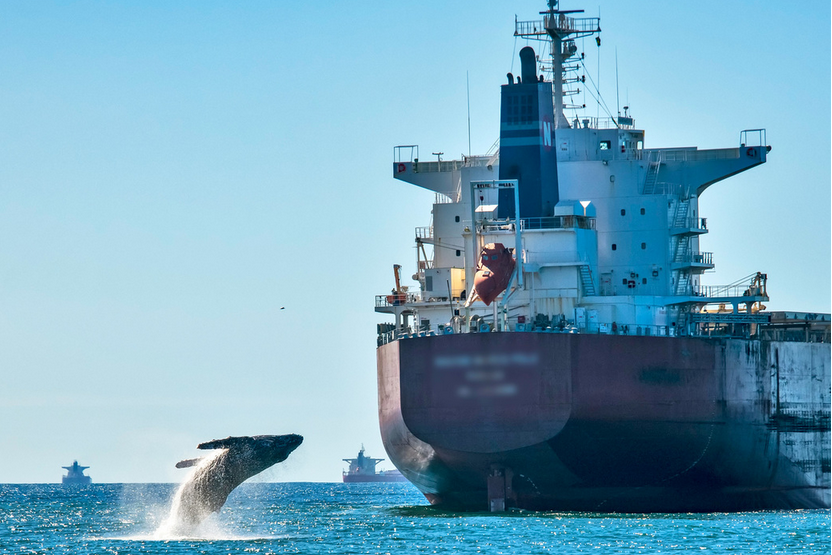
When the Red Sea became a shooting gallery in late 2023 — with attacks on vessels linked to Israel — the world's shipping lines began to look for an escape route. The Suez Canal, once the artery of global trade, suddenly felt like a trap.
Then came the US-Israeli war with Iran. The Strait of Hormuz, through which one-fifth of global oil passes, was effectively closed. The Persian Gulf became a naval war zone.
The result? A mass migration of merchant shipping — not of fish, but of steel — around the southern tip of Africa.
According to researchers at the University of Pretoria, the numbers are staggering. Between March and April 2026, nearly 90 cargo ships were rounding the Cape of Good Hope every single day. That is roughly double the traffic volume seen before the Red Sea disruptions began.
For global trade, this detour has meant longer voyages and higher fuel bills. For the whales of southern Africa, it has meant something far more lethal.
A Deadly Intersection
Marine biologist Els Vermeulen was scrolling through social media recently when a video stopped her cold. A ship's crew had filmed their vessel cutting through a dense pod of humpback whales — a breathtaking spectacle for the sailors. For Vermeulen, it was a near-death experience captured on camera.
"We see these videos and we think: how many collisions are happening that we never see?" she told AFP, according to the agency's report.
The danger is not merely about the number of ships. It is about their speed. Scientists from the University of Pretoria have documented a fourfold increase in the number of fast-moving vessels — those traveling faster than 27 kilometers per hour (about 17 miles per hour) — in the waters around the Cape.
Why does speed matter? Because whales do not behave the way humans expect them to. A blue whale, for instance, does not always flee an approaching ship. Studies have shown that they may slow down or dive just beneath the surface — a maneuver that, paradoxically, places them directly in the path of a fast-moving hull.
Globally, ship strikes are already among the leading known causes of death for large whale species. But most collisions go entirely undocumented. A whale that is hit, sinks, and never washes ashore simply disappears from the record.
A Simple Fix
Here is the paradox, and perhaps the only hopeful note in this story: the solution is remarkably simple.
Researchers have modeled alternative shipping lanes around the Cape of Good Hope. Their conclusion? A detour of just a few dozen kilometers — a negligible addition to any cargo ship's journey — could reduce collision risks by 20 to 50 percent, depending on the whale species.
Similar measures have already been adopted elsewhere. In waters off Sri Lanka and Greece, some major shipping companies have voluntarily adjusted their routes to avoid whale hotspots. The economic cost is minimal. The ecological benefit is immense.
South African scientists and conservation groups are now pushing for three things:
Better data collection, using reporting apps and AI-equipped cameras on ships.
Real-time sharing of whale locations with commercial vessels.
A formal request to the International Maritime Organization to adjust traffic separation schemes around the Cape.
The Unseen Thread
This is not a story about environmentalists versus oil companies. It is a story about unintended consequences — the spiderweb of connections that links a naval blockade in the Persian Gulf to a humpback whale swimming off Cape Town.
The ships diverting around Africa are not doing so out of malice. They are doing so because war has closed their usual roads. But the whales paying the price never voted for any government, never sent soldiers to any front, and never benefited from a single barrel of oil.
As Els Vermeulen put it in the AFP dispatch: what sailors see as a beautiful video, scientists see as a warning.
The question now is whether the shipping industry — already stretched thin by longer routes and higher costs — will make room for one more adjustment. Not for politics. Not for profit. But for creatures that have roamed these oceans for 50 million years, and who now find themselves swimming through a war they never asked for.
Source : AFP

The best of Tired Earth delivered to your inbox
Sign up for more inspiring photos, stories, and special offers from Tired Earth
By signing up for this email, you are agreeing to news, offers, and information from Tired Earth. Click here to visit our Privacy Policy.



Comment
Reply