The United States military has confirmed three waves of strikes against targets in southern Iran. However, reports from the ground indicate that among the facilities hit were two strategic civilian water reservoirs, leading to a complete shutdown of drinking water supply for thousands of residents.
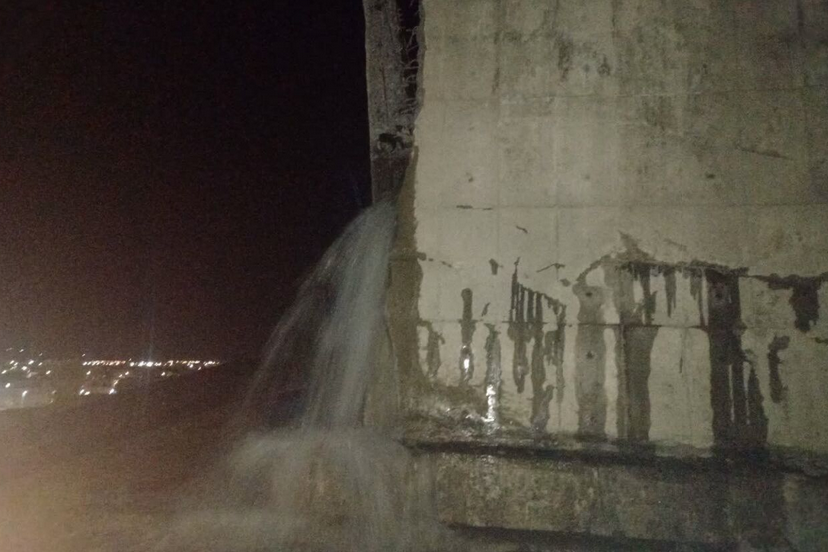
HORMOZGAN PROVINCE, Iran – The United States military has confirmed three waves of strikes against targets in southern Iran. However, reports from the ground indicate that among the facilities hit were two strategic civilian water reservoirs, leading to a complete shutdown of drinking water supply for thousands of residents.
The strikes, which occurred in the early hours of Wednesday, targeted the Bamani district near the city of Sirik in Hormozgan Province. According to Abdulhamid Hamzehpour, CEO of the Hormozgan Province Water and Wastewater Company, the attacks destroyed two critical water storage tanks: one with a capacity of 500 cubic meters and another of 2,000 cubic meters.
"These tanks played a key role in supplying drinking water to the Bamani district and the city of Kohestak," Hamzehpour said in a statement. He added that water distribution has been halted across all villages in the district and that crisis management teams are now working to implement alternative measures.
Iran’s Mehr News Agency has confirmed the waves of strikes, while local reports from Bandar Abbas, Qeshm, Sirik, and Jask continue to emerge.
A Question of International Law
Under the 1977 Additional Protocol I to the Geneva Conventions, specifically Article 54, attacks on objects indispensable to the survival of the civilian population—including drinking water installations and supplies—are prohibited. Such acts may constitute a war crime, regardless of the military necessity claimed by the attacking force.
The United States has not yet officially acknowledged targeting water infrastructure. CNN reports that it has reached out to U.S. Central Command (CENTCOM) for comment, but no response has been received regarding the specific damage to water facilities.
The Pentagon has described the strikes as a "proportionate response" to the downing of a US Apache helicopter, an incident the military has cited as an act of self-defense. However, legal experts note that proportionality under international humanitarian law requires distinguishing between military objectives and civilian infrastructure.
Operational Consequences
The immediate impact on the ground is measurable: water supply has been completely suspended in the Bamani district and Kohestak. While Iranian officials state that emergency teams are working to restore service, no timeline has been provided. In a region already facing water scarcity, the destruction of storage capacity could have long-term humanitarian consequences.
Lack of International Response
As of this publication, international organizations including the United Nations and the International Committee of the Red Cross have not issued statements regarding the targeting of water infrastructure in Hormozgan Province. Human rights and environmental law experts have long warned that attacks on civilian utilities in armed conflicts are underreported and rarely prosecuted.








Comment
Reply