



09 Mar 2026

Malec Paoli-Devictor
Environmental analyst and journalist
From Tehran to the very confines of the biosphere, the strikes carried out by Israel and the United States on Iranian refineries mark a dark turning point. By sacrificing the environment on the altar of military strategy, this act does not merely destroy resources: it violates the global rights of nature and condemns humanity to irreversible pollution. A deep dive into an act of ecocide that concerns us all.
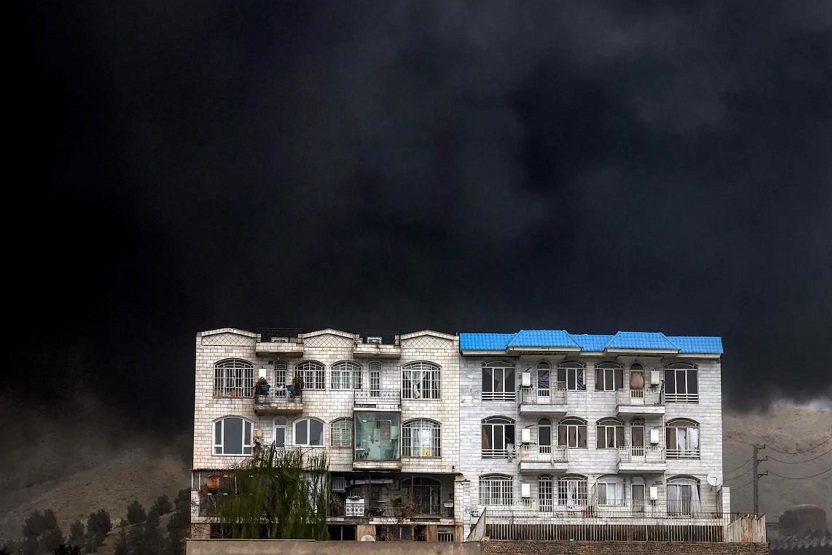
Since the massive strikes conducted on the night of March 7-8, 2026, by US-Israeli forces against the Shahr Rey oil complex, a viscous and toxic plume of smoke has stretched for hundreds of kilometers. According to Anadolu (2026), these strikes represent a historic shift by directly targeting the civilian energy heart of Iran for the first time. What military headquarters coldly term the "neutralization of strategic infrastructure" is, in reality, a characterized aggression against the world’s natural heritage and a premeditated crime against human dignity.
The ecological impact of these strikes is immediate and devastating. By targeting refineries and storage depots, the missiles have not only destroyed economic assets; they have released thousands of tons of pollutants into the biosphere. As highlighted by Dialogue Earth (2026), "any strike—or accidental damage—to refineries, storage sites, or tankers risks causing fires that degrade air quality, contaminate water supplies, and harm fragile marine ecosystems."
Initial reports describe "black rain"—precipitation heavy with soot and hydrocarbon residues—falling over surrounding agricultural lands and drinking water reservoirs. This combustion releases phenomenal amounts of carbon dioxide (CO2), sulfur dioxide (SO2), and nitrogen oxides (NOx). In the long term, these pollutants seep into groundwater and aquatic environments. According to Ifremer’s analysis on how marine organisms are affected by contaminants, these substances penetrate the tissues of living species, disrupting their growth and reproduction for decades. Here, nature is not "collateral damage"; it is a direct victim, mutilated by a modern scorched-earth strategy.
Attacking a country's energy infrastructure is an act that hits the most vulnerable first. By causing massive fuel and electricity shortages, these strikes condemn the civilian population to absolute precariousness. As noted by OCHA (2016), the environment is often the "silent victim" of armed conflicts, but its wounds directly impact human survival: "toxic fumes from burning oil wells and industrial facilities add to the distress of families."
Legally, International Humanitarian Law, specifically Article 54 of Additional Protocol I to the Geneva Conventions, strictly prohibits directing attacks against objects indispensable to the survival of the civilian population. By deliberately depriving millions of people of heating, electricity for hospitals, and food logistics, these military operations are not acts of defense, but a flagrant violation of the right to life and health.
It is imperative to name this disaster: it is an ecocide. According to the definition proposed by international experts, ecocide refers to "unlawful or wanton acts committed with knowledge that there is a substantial likelihood of severe and either widespread or long-term damage to the environment being caused by those acts."
By attacking the "rights of nature," belligerent powers ignore that the environment is a legal subject in its own right. Global natural law dictates that the Earth is not an inexhaustible battlefield. According to data from Le Délit (2024), military emissions and the destruction of industrial sites make the military sector the "fourth largest global polluter, representing nearly 5.5% of global emissions." To destroy a refinery is to poison the air we all share, far beyond Iran's borders.
These US-Israeli strikes on Iranian oil infrastructure must be condemned in the strongest possible terms. No military necessity can justify such an ecological and human disaster. The silence of the international community in the face of this "slow violence"—which kills through pollution and disease long after the bombs have fallen—is an unacceptable complicity.
Those responsible for these orders must be held accountable before the court of ecological history. As reminded by Libnanews (2026), the current escalation, including the Iranian retaliation on the Haifa refinery, creates a vicious cycle of mutual destruction where the only loser is the biosphere. International law must evolve to sanctify environmental and civilian energy infrastructures, permanently removing them from the list of legitimate targets.
Anadolu Agency (2026). Israel strikes oil storage tanks in Tehran.
https://www.aa.com.tr/fr/monde/israël-frappe-des-réservoirs-de-stockage-de-pétrole-à-téhéran/3854548
Dialogue Earth (2026). As the Gulf conflict widens, so does its environmental footprint.
https://dialogue.earth/en/nature/as-the-gulf-conflict-widens-so-does-its-environmental-footprint/
Libnanews (2026). Iran strikes Haifa refinery following US-Israeli attacks on Shahr Rey oil complex.
Ifremer. How marine organisms are affected by contaminants.
https://www.ifremer.fr/fr/comment-les-organismes-marins-sont-affectes-par-les-contaminants
Le Délit (2024). Ecocide in times of war: A study on military emissions.
https://www.delitfrancais.com/2024/03/27/ecocide-en-temps-de-guerre/
OCHA / United Nations (2016). Environment: the silent victim of armed conflict.
https://www.unocha.org/publications/report/world/l-environnement-est-la-victime-silencieuse-des-conflits-arm-s#:~:text=Les%20nuages%20de%20poussière%20suffocants,coordonnateur%20des%20secours%20d%27urgence.
ICRC (2023). Protection of the natural environment in armed conflict: Protocol I of the Geneva Conventions.
https://ihl-databases.icrc.org/fr/ihl-treaties/api-1977/article-54
https://www.quidjustitiae.ca/blogue/highlight_Environnement_DIH

The best of Tired Earth delivered to your inbox
Sign up for more inspiring photos, stories, and special offers from Tired Earth
By signing up for this email, you are agreeing to news, offers, and information from Tired Earth. Click here to visit our Privacy Policy.



Comment
Reply