Imagine a world where the oil giants pay a price for traversing the planet's vital arteries — not a price for fuel, but a price for the oceans to breathe again. This is precisely the scenario that Iran is seriously pursuing with its proposal to levy environmental fees in the Strait of Hormuz. Beyond the political controversy, this move carries a clear moral message: the era of free exploitation of our shared natural heritage is over.
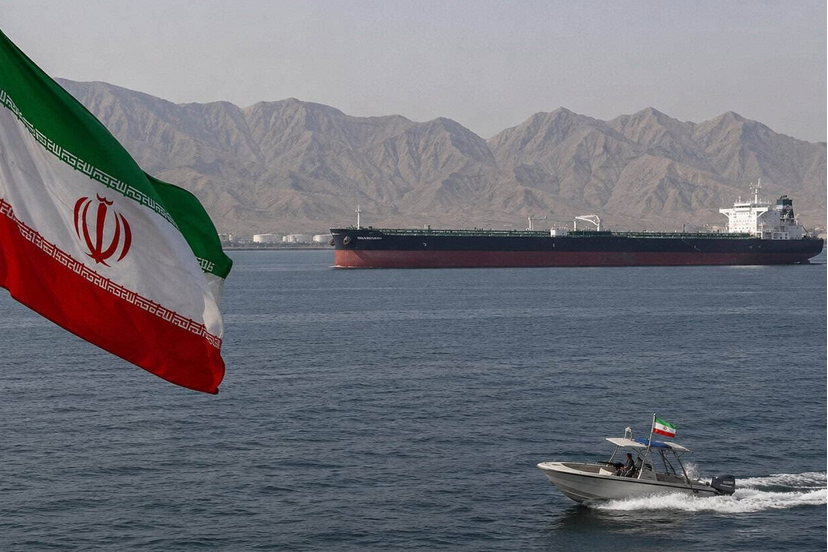
In recent days, as news filters through of technical negotiations between Iran and the United States over the future of the Strait of Hormuz, few have paid attention to a hidden but fundamental layer of this affair. Tehran's proposal for transit fees, contrary to the initial interpretation of many analysts, is framed not as "exorbitant tolls" for the right of passage, but rather within the category of "service tax."
Permissible tax, Impermissible Tolls
This distinction makes a world of difference from the perspective of international law. The 1982 United Nations Convention on the Law of the Sea (UNCLOS) prohibits the levying of any fees solely for the passage of vessels through international straits. However, it simultaneously permits the collection of charges in exchange for specific, verifiable services rendered. These include pilotage services, maritime search and rescue, traffic control, and — most importantly — environmental monitoring and clean-up operations. All of these fall squarely within this provision of the Convention.
Russia has already implemented a similar fee system in the Northern Sea Route, charging for icebreaker escort services. Turkey, too, has long collected fees for navigation and safety services in the Bosphorus and Dardanelles straits, operating on the same legal principle. What Iran is proposing, in coordination with Oman, is not an innovation, but an intelligent extension of an established international practice into the domain of marine ecosystem protection.
The Resistance of Entrenched Interests
This approach, however, runs counter to a powerful current of vested interests. An environmental tax signals the end of cheap, unaccountable transit through the heart of the Middle East. For centuries, the world's oil and commercial giants have accumulated wealth at the cost of the gradual destruction of marine life in the Persian Gulf.
The world's waterways have long functioned as toll-free highways for the cheap transfer of energy — highways whose hidden costs, in the form of oil spills, overfishing, and the slow death of coral reefs, have been borne by nature and by coastal communities. The oil giants, which find no line item in their accounting ledgers for environmental damage, naturally resist any new expense. But their opposition stems less from legal concerns than from a simple calculus of profit and loss.
Diverting tankers around Africa or sending them through alternative routes would impose costs many times higher than any marine service fee. This economic reality will ultimately make the acceptance of such charges an unavoidable choice for the major players in the oil industry. In a cold economic calculation, even the most ardent opponents will be compelled to accept this new cost — for the financial loss of rerouting far outweighs the burden of the fee itself.
International Oversight
But the more nuanced aspect lies in a dimension rarely addressed. Contrary to the popular notion of "unregulated taxation," this legal framework would assign international bodies — such as the International Maritime Organization (IMO) — as supervisory authorities over Iran's performance. To collect these fees, Iran would be obliged to provide transparent accounting of the services rendered: from surface and subsurface clean-up operations to the deployment of modern pilotage and navigation systems.
In other words, this proposal places Iran not merely in the role of observer, but in the position of a verifiable service provider. Any deviation from this framework would not only invite legal consequences but would also jeopardize Iran's international standing — a risk no country would lightly assume.
A Global Transformation?
Perhaps the most significant message of this event, beyond its short-term political disputes, is yet to be fully appreciated. It could be argued that for Iran, this move is less about genuine environmental concern or even economic gain, and more about asserting and preserving its sovereignty over this vital strait — pursued through the symbolic vehicle of navigation and environmental service fees. Yet Iran, perhaps without fully grasping the scope of its impact, has laid the cornerstone of a new discourse in global maritime trade.
A discourse in which international waterways are no longer seen merely as energy transit corridors, but as natural assets with calculable added value. If this model, underpinned by adequate oversight and transparency, proves successful — and the simple arithmetic of economics suggests it will — similar schemes will gradually emerge in the Straits of Malacca, Bab el-Mandeb, and even the Suez and Panama Canals.
Should that come to pass, economic historians will mark the year 2026 as a turning point. A year in which a Middle Eastern country, drawing on a combination of international law and environmental necessity, presented the world with a formula that no one before had thought to implement practically. A formula that, though designed with the primary intention of safeguarding security and national interests, ultimately became a global template for redressing the hidden costs that the fuel industry has evaded for generations.









Comment
Reply