The plastic bag is a symbol of convenience without consequence. That illusion has now collapsed. The evidence is visible in flooded streets, blocked drains, polluted coastlines, and the mounting costs of waste management.
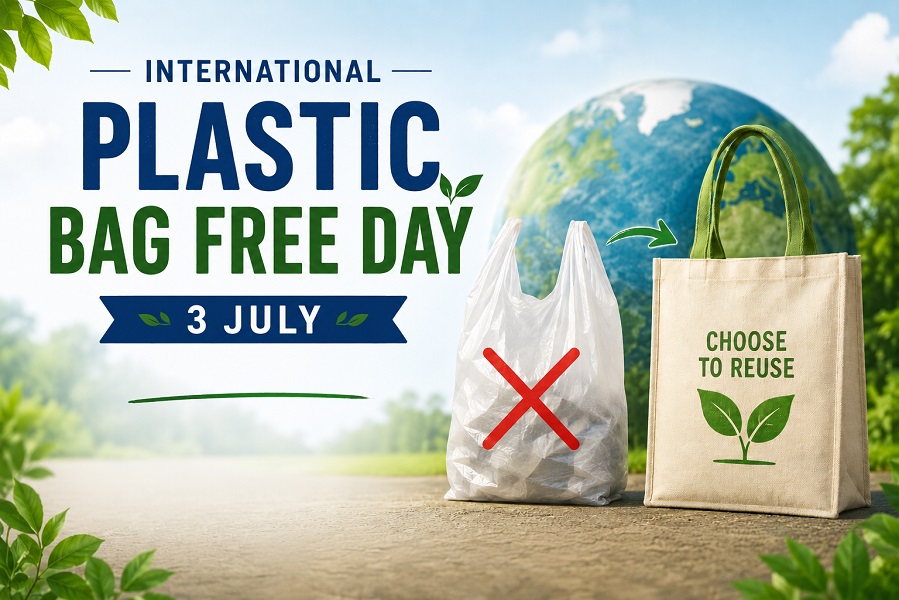
Every year on 3 July, the world marks International Plastic Bag Free Day, a reminder that one of the most ordinary objects in modern life has become one of the most damaging symbols of our throwaway economy. Plastic bags are cheap, light, and convenient, but their true cost is paid in flooded streets, polluted drains, poisoned waterways, declining marine life, and communities forced to live with the consequences of waste that should never have been designed for disposability in the first place.
This day is not merely about changing shopping habits. It is about confronting a global environmental crisis. It asks why so many cities still struggle with blocked drainage systems, why rivers continue to carry plastic into the sea, and why governments still treat plastic pollution as a minor nuisance rather than the public emergency it has become. Across continents, the evidence is now impossible to ignore.
Plastic bags are used for only a short time, but they remain in the environment for decades, often longer. Because they are lightweight, they are easily carried by wind and water into gutters, markets, open dumps, streams, and storm drains. From there, they break into smaller fragments, but they do not disappear. Instead, they become part of the growing burden of microplastics that contaminate soil, water, food systems, and the broader ecosystem.
What makes plastic bags particularly dangerous is not only their volume, but their mobility. They escape collection systems with ease. They clog drains. They accumulate in low-lying settlements. They are carried into wetlands, lagoons, and coastal waters. In places already struggling with weak waste management infrastructure, a single-use item becomes a long-term public burden.
The crisis is not confined to one region. It is visible in crowded cities, along coastlines, in rivers, and in rural communities that often receive the waste burden of urban consumption. The plastic bag has become a global environmental failure with local consequences everywhere.
One of the most immediate and visible consequences of plastic pollution is flooding. Around the world, blocked drainage channels filled with plastics and other solid waste worsen the impact of heavy rainfall, overwhelm stormwater systems, and turn ordinary downpours into destructive urban disasters.
Recent flooding in parts of Nigeria, including Abuja and Lagos, has once again exposed the deadly link between unmanaged plastic waste and drainage failure. In Ghana, flooding in Accra has repeatedly been worsened by refuse clogging drains, including plastic packaging and bags. In Ivory Coast, Abidjan has faced similar challenges, where intense rainfall and obstructed waterways combine to create severe urban flooding. These are not isolated incidents; they are symptoms of a wider pattern.
The same dynamic appears in cities and coastal settlements around the world. When plastic waste blocks water channels, the results are predictable: streets overflow, homes are damaged, transport systems fail, and public health risks rise. What appears to be a litter problem becomes an infrastructure crisis. What seems like a personal habit becomes a collective threat.
In an era of intensifying climate shocks, plastic pollution makes vulnerability worse. Cities already dealing with poor drainage, informal settlement growth, and underfunded waste systems are especially exposed. Plastic bags are not the only cause of flooding, but they are among the most visible and preventable aggravating factors. The challenge of plastic bags is visible around the world, as coastal communities in Asia, Europe, the Americas, and Africa have all reported damage from plastic litter washing into oceans and beaches. Rivers such as the Ganges, Niger, Citarum, and others have become conduits for plastic waste, carrying discarded bags and packaging from inland communities to the sea.
Marine animals often mistake plastic for food or become trapped in it. Birds, turtles, fish, and other wildlife suffer injury, starvation, or death as a result. But the crisis does not stop at wildlife. Plastic pollution affects tourism, fishing livelihoods, public health, and municipal budgets. Every bag that ends up in a drain or river represents a cost that someone else must pay later.
The issue extends beyond visible waste. As plastic breaks down into microplastics, it enters ecosystems in forms that are harder to remove and easier to overlook. These fragments are now being detected in oceans, rivers, soils, food chains, and even human bodies. The question is no longer whether plastic pollution is spreading. The question is how long the world can afford to tolerate it.
But if the harm is so clear, why do plastic bags remain so common? The answer simply lies in convenience, cost, and weak regulation. Plastic bags are often given out freely at points of sale, especially in informal markets, where alternatives may seem more expensive or less accessible. Many retailers and consumers have become accustomed to treating bags as disposable and unlimited. Meanwhile, waste collection systems in many cities do not capture all plastic waste, and enforcement of anti-littering or waste-reduction policies is often inconsistent.
Another issue is that responsibility has been placed too heavily on consumers alone. Telling people to “just use reusable bags” is important, but insufficient. Real change requires producers, retailers, governments, and waste managers to all act together. The plastic problem was created by a system, and it will not be solved by individual goodwill alone. This is especially true in countries where waste infrastructure is uneven and where inexpensive plastic continues to flood markets because regulation is weak or poorly enforced. Without structural change, the same cycle repeats: production, consumption, disposal, blockage, flooding, and contamination.
Policy Matters
A serious response to plastic bags must combine regulation, enforcement, infrastructure, and public education. That means stronger controls on unnecessary single-use plastics, better waste collection, improved drainage maintenance, and practical support for local alternatives. Some governments have already taken steps toward banning or restricting plastic bags, but the effectiveness of these measures depends on implementation. A law on paper does not remove waste from a drain. A ban without alternatives can create resistance. A campaign without enforcement often fades quickly. What is needed is a durable policy framework that reduces plastic use while making compliance realistic. A strong approach should include:
-
Gradual restriction or phase-out of thin single-use plastic bags.
-
Incentives for reusable and compostable alternatives.
-
Extended producer responsibility, so manufacturers help finance waste recovery.
-
Better market-level waste collection and segregation.
-
Education campaigns in schools, markets, transport hubs, and faith communities.
Policies work best only when they are clear, enforceable, and paired with accessible alternatives. Without alternatives, bans can feel punitive. Without enforcement, policies become symbolic. Without public engagement, compliance remains weak.
What Businesses Can Do
Businesses have a major role to play in the transition away from plastic dependence. Retailers, supermarkets, restaurants, event planners, manufacturers, and logistics companies can reduce their plastic footprint through simple but meaningful changes. They can:
-
Offer reusable bags for sale or as standard packaging.
-
Charge for single-use bags to reduce unnecessary consumption.
-
Switch to paper, cloth, or other lower-impact packaging where appropriate.
-
Train staff to encourage customers to bring their own bags.
-
Support take-back or refill models where possible.
Businesses that act early can strengthen their reputation, reduce waste costs, and align themselves with growing public concern about sustainability. This is no longer a fringe issue. It is a consumer, health, and resilience issue.
What Communities Can Do
Communities are not powerless in the face of plastic pollution. Local action matters, especially when it is organized and repeated. Schools can run waste education campaigns. Religious institutions can host cleanup days. Market associations can adopt anti-litter rules. Youth groups can advocate for cleaner drains and better waste management. Residents can make reusable bags part of everyday life and refuse unnecessary packaging.
But community action must be supported by systems. A cleanup campaign is valuable, but it is not a substitute for policy. A reusable bag is useful, but it will not solve the problem if neighborhoods remain without regular waste collection. Activism should therefore be paired with accountability.
This is why the fight against plastic pollution must be understood as both a local and global responsibility. Every city has its own waste realities, but the broader challenge is shared: we have built an economy that produces too much disposable material and too little durable responsibility.
The Case for Reusables
The movement away from plastic bags is not a return to inconvenience. It is actually a move toward responsibility. Reusable bags, baskets, tote bags, and other durable options can dramatically reduce waste over time. They are practical, visible, and easy to normalize. In many households, one strong reusable bag can replace hundreds of disposable bags in a year.
This is one of the clearest examples of how a small change can create a large effect. If enough shoppers carry reusable bags, retailers will stock fewer disposable ones. If enough markets reduce plastic distribution, less waste will enter drains. If enough cities prioritize waste collection and drainage clearance, flooding risks can be reduced. The logic is simple, but the impact depends on scale. The shift to reusables is not only environmental; it is cultural. It signals a refusal to accept disposability as the default model of modern life.
A Day for Action, Not Symbolism
International Plastic Bag Free Day should not become another date on the environmental calendar that is observed politely and forgotten by the next morning. It should be a call to action for governments, businesses, schools, media houses, and households. The objective is not perfection. The objective is reduction, reform, and responsibility.
The plastic bag is a symbol of convenience without consequence. That illusion has now collapsed. The evidence is visible in flooded streets, blocked drains, polluted coastlines, and the mounting costs of waste management. A cleaner future will not come from awareness alone. It will come from decisions: policy decisions, business decisions, and daily consumer decisions that move us away from disposability and toward durability.
On 3 July, the message should be unmistakable: the era of casual plastic bag use must end. Not because it is fashionable to say so, but because the environment, the economy, and public safety can no longer afford the cost of delay.








Comment
Reply