


24 Nov 2026

Tired Earth
By The Editorial Board
The summit collapsed without an agreement on finance, adaptation, or fossil fuels. But the decisive absence was not at the negotiating table — it was the country that never sat down at it.
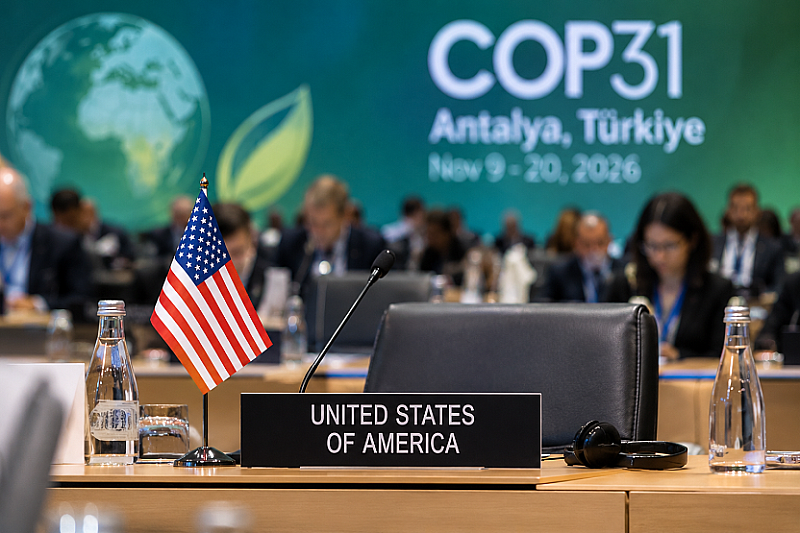
The Antalya Expo Center has emptied. The delegates have gone home, most of them sleep-deprived, several of them angry, and all of them aware that two weeks and two days of negotiation produced no deal. Turkey's environment minister, Murat Kurum, accepted defeat. The phase-out of fossil fuels — first written into a COP text three years ago in Dubai — was missing from the final draft. Carbon capture and storage, which many read as a way of keeping business as usual in business, was conspicuously present.
The immediate culprit was the consensus rule: a handful of oil producers can block the will of nearly two hundred governments. But the deeper story is about who was not in the room, and what that absence made impossible.
The Empty Chair
Donald Trump's first act after returning to the presidency was to withdraw the United States from the UN climate process. So when COP31 opened, the world's largest historical emitter, and traditionally among the largest funders of adaptation for poorer countries, had no seat at the negotiating table.
This mattered in ways that go beyond money. Several attendees pointed to Washington's capacity — under a "constructive president" — to rally the troops, notably China and Saudi Arabia, when negotiations seize up. The US-China bilateral deal at COP26 in Glasgow is the textbook example: it helped rescue a summit that was on the verge of failing.
Europe cannot play that role. The EU has leverage, but it is not trusted the same way, and it does not carry the same weight with the petrostates. Kurum had no such lifeline to throw.
The Democrats turned up in Antalya in large numbers. They had no seat at the table, and no means of making a commitment that would have bound their own government.
A Moral Obligation Declined
This is where the language of "regret" is too soft. The United States is the largest cumulative emitter in history, the wealthiest economy on earth, and the architect of the multilateral system now being asked to deliver climate finance. Its decision to walk away is not a neutral choice about participation. It is a decision to accept the benefits of a stable climate order while refusing the costs of maintaining it.
Wopke Hoekstra, the EU's climate chief, said before the summit began that hopes for more money were "dead in the water." That assessment was accurate, and it was accurate because of the empty American chair.
The EU's Contradiction
But Washington's absence does not excuse Brussels. The EU is more concerned with increasing its defence budget than with financing climate action — that it has "pushed climate too far down the agenda."
The record supports her. The EU was right to reject a text that omitted fossil fuels and greenwashed carbon capture; it said it could "not accept a COP that greenwashes fossil fuels." But Chiara Martinelli of CAN Europe made the sharper point the day the talks collapsed: the EU arrived in Antalya with a strategy of red lines, refusing to engage on finance, and then claimed leadership over a failure it helped produce. Condemning weak mitigation while withholding money for adaptation is not leadership. It is positioning.
What Survived
It would be dishonest to call Antalya a total loss. Ninety countries backed a commitment to boost electricity's share of energy production and consumption — a shift the International Energy Agency estimates could cut global oil use by as much as 18 million barrels a day. Over 260 businesses pledged to accelerate electrification. Multilateral development banks restated commitments to deliver $120 billion a year and mobilise $65 billion in investment for poorer countries by 2030. Public finance for climate action was otherwise absent, but the forest money and the bank commitments are real.
Whether those pledges survive contact with domestic politics is another matter. Andy Burnham, one of the few heads of government to attend, promised to "speed" the transition. Eliot Whittington of Cambridge's Institute for Sustainability Leadership posed the question that will define the next two years: what will the UK's partners think if it waters down its electric vehicle targets at home? Fine words in Turkey mean nothing if the domestic policy goes the other way.
What Antalya Teaches
The summit's failure will be read by some as proof that the COP process is finished — a trade fair with a negotiating annex. Christiana Figueres disagrees, and she is right that no other forum exists where every country must answer, in public, for what it is doing.
But a process that requires unanimous consent, in a world where the largest emitter has abdicated and the wealthies
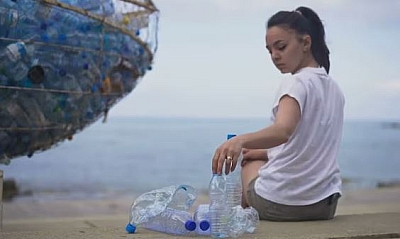
Plastic Pollution in Cameroon and Africa Plastic Pollution in Cameroon and Africa

The best of Tired Earth delivered to your inbox
Sign up for more inspiring photos, stories, and special offers from Tired Earth
By signing up for this email, you are agreeing to news, offers, and information from Tired Earth. Click here to visit our Privacy Policy.


Comment
Reply