by Philip Broadbent, The Conversation
The heat waves of late May and June killed an estimated 2,700 people in England and Wales, according to a recent analysis—around 550 in May, when west London hit 35.1°C (95°F), and 2,200 in June, as East Anglia reached 37°C (99°F).
Both events broke records that had stood since 1944 and 1976, and researchers estimate that 42% of the deaths were attributable to the extra heat resulting from human-induced climate change. They add to a mounting toll: more than 10,000 people died during UK heat waves between 2020 and 2024, according to the UK Health Security Agency (UKHSA).
Public health experts call extreme heat a "silent killer" that can claim anyone, even the young and fit. That is true and worth repeating. But it obscures the pattern of what is happening: Heat deaths are not scattered randomly across the population. They fall predictably and measurably on particular people in particular homes.
Around 60% of the estimated deaths in May and June were among people 85 and older. But age is only part of the story because vulnerability to heat is socially patterned. A Government Actuary's Department analysis, published days before the June heat wave, shows that England's most deprived communities are concentrated in dense urban areas with the least green space—places subject to the "urban heat island" effect. This is where concrete and asphalt absorb heat by day and release it at night, depriving residents of the relief of overnight cooling that allows people to recover.
Every English neighborhood that ranks among both the 10% most deprived and the 10% most exposed to extreme heat is in London. During the 40°C (104°F) heat wave of 2022, the urban heat island effect was itself responsible for a substantial share of London's heat-related deaths.
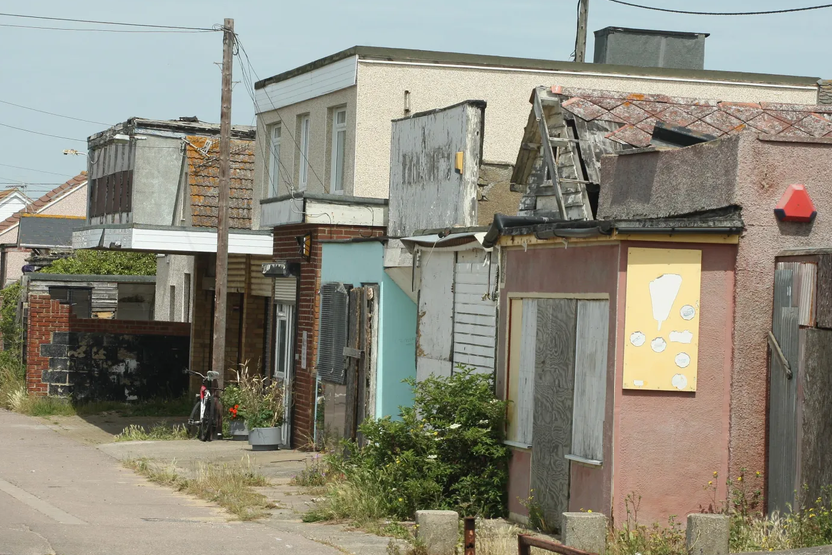
The common thread is housing. An analysis by the Resolution Foundation think tank found that 54% of the poorest fifth of English households live in homes at high risk of overheating, compared with 18% of the richest fifth. Two-thirds of social renters and six out of 10 households with young children live in homes at the highest risk as the country warms.
Apartments, small homes and overcrowded properties trap heat. Renters cannot fit shutters or external shading, and cooling costs money that low-income households do not have. The English Housing Survey, carried out by the UK government, found that 2.9 million households said their homes get uncomfortably hot.
Year-round problem
The troubling part is that these are largely the same homes we already knew were dangerous in winter. Cold homes caused an estimated 4,950 excess winter deaths across Britain in 2022–23—around 45 people a day through the coldest months.
We have treated fuel poverty as a cold-weather problem, addressed with winter fuel payments and seasonal campaigns. But a poorly insulated home is thermally incompetent all year round: It leaks heat in January and traps it in July. The same outdated, inadequate housing stock kills in both seasons; only the mechanism changes. Fuel poverty is not a winter problem that pauses in spring—it is a year-round emergency.
None of this is inevitable, as last summer proved. In 2025, UKHSA recorded 1,504 heat-associated deaths in England: roughly half the 3,039 its models had predicted from temperatures alone, a pattern consistent across all five heat episodes that year. UKHSA is careful to note that causes cannot be firmly attributed, but heat-health alerts and the systemwide response across the NHS, social care and emergency services are likely to have contributed. Adaptation, in other words, saves lives at scale.
But adaptation, too, is unequal. Private adaptation—air conditioning, well-ventilated houses, leafy suburbs—is concentrated among the wealthy. And public health advice to "keep cool" is least effective for precisely those with the least capacity to act on it: the tenant who cannot alter her apartment, the retiree who cannot afford to run a fan. As heat waves intensify, the gap between those who can buy their way to safety and those who cannot will widen unless policy closes it.
Heat episodes in England are predicted to become more intense, longer and more frequent as the climate warms. The Climate Change Committee, the government's independent climate adviser, has proposed that heat-related deaths in 2050 should be no higher than they are today. Achieving this will require treating heat as both a housing and an inequality issue. This includes retrofit programs that prepare homes for summe









Comment
Reply