


04 Nov 2026

Tired Earth
By The Editorial Board
Donald Trump's reported consideration of a tactical nuclear strike on Iran's Kalang Mountain facility would not just be a military act. It would be an environmental crime with no borders.
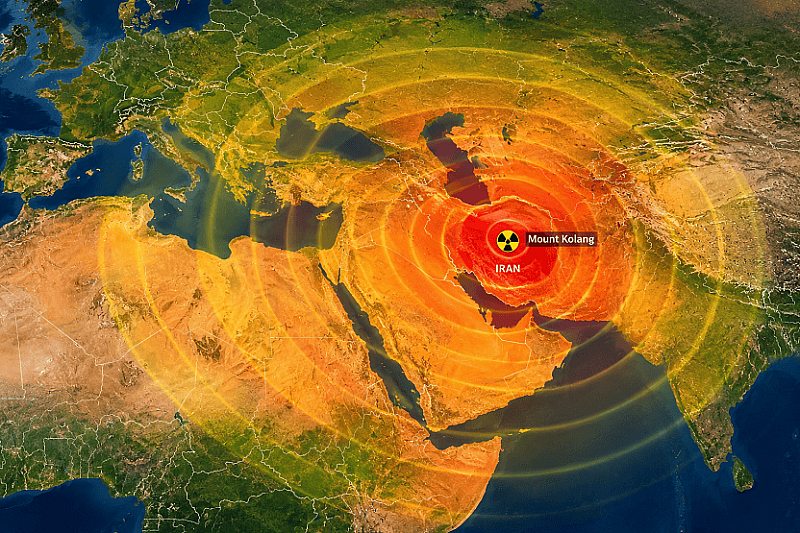
The headlines have been dominated by the mechanics of war: which bombs, which targets, which timelines. But a quieter, far more dangerous story is unfolding—one that human rights organizations and environmental groups have been conspicuously slow to confront.
In late October and early November 2026, reports emerged that President Donald Trump had threatened to use a tactical nuclear weapon to destroy Iran's deeply buried nuclear facility at Kalang Mountain (also referred to as Pickaxe Mountain) near Natanz. The claim, amplified by conservative commentator Tucker Carlson, was that no conventional weapon could penetrate the site's granite defenses, leaving nuclear options on the table. The mere fact that such a threat entered mainstream discourse—casually, almost as a negotiating tactic—marks a profound rupture in the post-Hiroshima taboo.
The Technical Lie Beneath the Threat
The premise is as flawed as it is dangerous. Military experts have repeatedly explained that a tactical nuclear weapon would not reliably destroy the Kalang facility. The site is estimated to lie 80 to 100 meters beneath granite. The GBU-57 "bunker buster"—often called the "mother of all bombs"—can penetrate only about 60 meters before its destructive energy is spent. The B61-13, the most modern U.S. earth-penetrating nuclear gravity bomb, was designed for frozen soil and hardened Soviet-era targets, not for hundreds of meters of solid granite.
Destroying a facility and disabling it are not the same thing, as nuclear experts have pointed out; one does not need to vaporize a mountain to render a weapons program inoperable. But that distinction is lost in the rhetoric of "shock and awe." The threat is not about military efficacy. It is about political spectacle.
The Real Danger: A Radioactive Cloud Without Borders
What makes the nuclear threat so catastrophic is not the blast. It is what happens after.
A nuclear detonation—even a "tactical" one—would eject radioactive soil and debris into the atmosphere. If detonated at shallow depth to maximize cratering, the resulting fallout would be carried by prevailing winds across the region. Analysis of the scenario warns that radioactive contamination could spread far beyond Iran's borders, reaching the Persian Gulf, Pakistan, and even northwest India.
The Persian Gulf is particularly vulnerable. Its waters are semi-enclosed, with limited exchange with the Indian Ocean, meaning contaminants persist for years. A radiological release could threaten drinking-water supplies for tens of millions of people across the Gulf states. Surface currents could carry waterborne radionuclides to Kuwait and Bahrain within fifteen days. Caesium-137, a long-lasting radioactive isotope, could contaminate marine ecosystems and coastal aquifers for decades.
The Silence of the Guardians
The environmental and human rights movements—the very actors who have spent decades warning about nuclear proliferation, climate change, and the toxic legacy of war—have largely failed to respond with the urgency this moment demands.
Although, Greenpeace has condemned Trump's threats to Iran's infrastructure, warning of humanitarian and nuclear disaster. More than 200 organizations and experts have signed appeals calling on Congress to prevent the use of nuclear weapons against Iran. Greta Thunberg has criticized the international silence surrounding Trump's threats.
But these remain scattered voices. The massive, coordinated, global mobilization has not materialized for a threat that could render parts of the Middle East uninhabitable for generations.
The reason may be uncomfortable: nuclear weapons are abstract in a way that melting glaciers and dying coral are not. They are the domain of generals and think tanks, not of environmental NGOs. The environmental movement has, for the most part, ceded the nuclear question to the peace movement, and the peace movement has ceded the environmental question to no one.
The Cost of Looking Away
This silence has consequences. When environmental and human rights organizations do not speak, the space is filled by those who normalize the unthinkable. The taboo against nuclear use is not a law of nature. It is a norm—fragile, constructed, and maintained only by constant vigilance.
The Kalang Mountain facility may or may not be struck. The B61 may or may not leave its bunker. But the threat itself is already a form of violence—against the planet, against the communities of the Gulf, and against the very idea that some weapons are beyond the pale.
It is time for the environmental and human rights movements to break their silence. Not because the strike is certain, but because silence is how the unacceptable becomes policy.
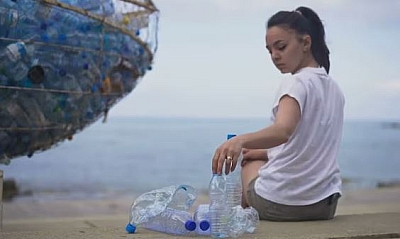
Plastic Pollution in Cameroon and Africa Plastic Pollution in Cameroon and Africa

The best of Tired Earth delivered to your inbox
Sign up for more inspiring photos, stories, and special offers from Tired Earth
By signing up for this email, you are agreeing to news, offers, and information from Tired Earth. Click here to visit our Privacy Policy.


Comment
Reply