The U.S.-Israeli military strikes have inflicted a devastating toll on Iran's already fragile ecosystems, from endangered cheetahs in the mountains to sea turtles in the Strait of Hormuz.
When the bombs began falling on Iran in late February, the world's attention turned to the human cost: thousands dead, cities scarred, infrastructure in ruins. But beneath the headlines, a quieter catastrophe has been unfolding — one that may leave ecological scars for generations .
Iran's unique geography — a land of dense Caspian forests, arid deserts, and the mountain ranges of Zagros and Alborz — harbors an "astounding diversity of life," according to
The Associated Press. The country is home to at least 86 species at risk of extinction, including the critically endangered Asiatic cheetah, Persian leopard, brown bear, Persian fallow deer, and numerous birds of prey .
Now, those species are caught in the crossfire.
_1784714369.png)
Kushki (male) is one of the last surviving Asiatic cheetahs from northeastern Iran’s Miandasht Wildlife Refuge. Image by Ehsan Kamali / Tasnim News Agency via Wikimedia Commons (CC BY 4.0).
The cheetah's last stand
The Asiatic cheetah, the world's rarest big cat with fewer than 30 individuals remaining in the wild, faces an existential threat. Conservationists had recorded a rare glimmer of hope just before the war: a female named Helia was filmed with five cubs — the largest litter ever recorded for the subspecies .
But the war has disrupted the fragile conservation efforts that were keeping the species alive. Access to protected areas has "slowed down considerably," a local conservationist told Mongabay, interrupting long-term monitoring and camera trapping efforts. There are fears that conservation vehicles could be misidentified as military targets in the remote desert landscapes where the cheetahs live .
The impact extends beyond the immediate conflict. Western sanctions have already crippled conservation work, limiting access to tracking technology and veterinary supplies. "After the war, I doubt that the government has any money left for the conservation of the cheetah," Jamshid Parchizadeh, a wildlife biologist at Michigan State University, told
Mongabay .
The visible victims
The most visible evidence of the war's environmental toll comes from Kharg Island, Iran's main oil export hub. After airstrikes targeted the island, at least 25 gazelles were confirmed dead, according to Masoumeh Safaei, deputy director of Iran's Office for Wildlife Protection and Management. The actual number "is higher than what has been recorded so far," she told Iranian media .
Video footage shared by the Iranian Embassy in India shows terrified gazelles running through the streets and onto bridges, panicked by the explosions — a haunting reminder that wildlife has no place to hide from the violence .
The psychological trauma may be as devastating as the physical toll. At Tehran's Lavizan Bird Garden, the "deafening noise" of explosions caused birds to lose "behavioural control" due to "severe stress," colliding with enclosure walls and resulting in injuries and some fatalities . International studies have shown animals exposed to conflict zones develop "disrupted migration, feeding, and breeding patterns" and show signs of "severe aggression or depression" .
The marine world under siege
The Strait of Hormuz, one of the world's most strategically vital waterways, is also an ecological wonder. It is home to the "most diverse coral population in the region," according to
CNN, and supports dolphins, sea turtles, dugongs, and whale sharks .
But the conflict has turned the strait into a toxic trap. Greenpeace researchers "regularly detect oil slicks" in the water following attacks on tankers . Approximately 85 oil tankers were stranded in the Gulf during the crisis, each consuming 20-40 tons of fuel daily just to maintain onboard systems — releasing 3-5 tons of sulfur dioxide, 4-7 tons of nitrogen oxides, and over 100 tons of carbon dioxide into the atmosphere every day, along with hazardous particulates that accumulated in the enclosed waters .
The ecological consequences are cascading. "Many of the compounds found in crude oil will target heart function and respiration," Martin Grosell, a professor of marine biology at the University of Miami, told
CNN. Prolonged exposure "suppresses immune function, rendering animals more susceptible to infections" .
The damage has already reached Pakistan's shores. A thick layer of crude oil has covered a 20-kilometer stretch of coast near Gwadar, likely originating from attacks in and around the strait. At least four dead green sea turtles — an endangered species — have been found on the contaminated shoreline .
A troubled history collides with crisis
Iran's conservation movement has deep roots — the country was one of the first to create an environmental protection agency, established just a year after the U.S. in 1970 . But decades of crippling sanctions, and severe drought had already pushed the country's biodiversity to the brink.
The war has now closed off access to key wildlife sites on Persian Gulf islands, cut off international funding for conservation groups, and made fieldwork increasingly dangerous. "It's a big question how much longer we and other conservation NGOs can keep working," Iman Ebrahimi, founder of the AvayeBoom Bird Conservation Society, told
The New Indian Express. "We're waiting every moment to see what happens" .
Even the falcons that once found safety in military zones — beyond the reach of smugglers and poachers — are now at risk. The bombing coincided with the breeding season of Iran's prized Saker and red-naped Shaheen falcons, some of the world's fastest birds .
When the bombs stop, the environmental rehabilitation of Iran will likely take a back seat to reconstruction of cities and infrastructure, experts warn. But the damage to the country's unique biodiversity, once lost, cannot be rebuilt .
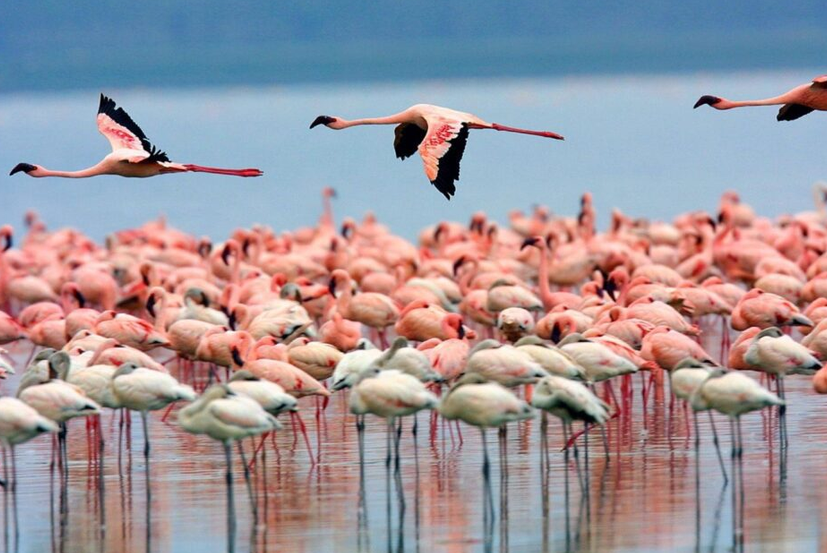
Banner photo: Urmia Lake National Park (photo by Iran Front Page)









Comment
Reply